Why Is My Furnace Blowing Cold Air?
A furnace that runs but sends cool air may have a thermostat, airflow, ignition, or control issue. Start with safe observations, then arrange diagnosis if the cause is not clear.
Read the guide →It is 2 a.m. in Everett, the wind is coming off the Mystic River, and the house is getting colder by the hour. This guide explains what counts as a real emergency, what to check safely in the first few minutes, and what happens when a technician comes out.
It is 2 a.m. in Everett, the wind is coming off the Mystic River, and the house is getting colder by the hour. You can hear the furnace try to start, then stop. Then nothing. That quiet is what makes a furnace failure feel different from any other home problem. It is not just uncomfortable. In a Massachusetts winter, it can turn into frozen pipes, a cold house that is not safe for kids or older family members, and a long night if you do not know what to do next.
This guide is written for Everett homeowners, from the triple-deckers near Broadway to the single-family homes in the neighbourhoods around Ellsworth Street. It explains what counts as a real emergency, what you can safely check in the first few minutes, what you should never try yourself, and what happens when a technician from Everett Air HVAC comes out for an emergency furnace repair.
No guesswork, no panic, and no pressure. Just a clear order to follow when the heat goes out.
Not every furnace problem needs a middle-of-the-night call. Some can wait until morning. Others cannot. The difference is usually safety, temperature, and time.
Ask these three things, in this order. If the answer to any of them is yes, treat it as an emergency.
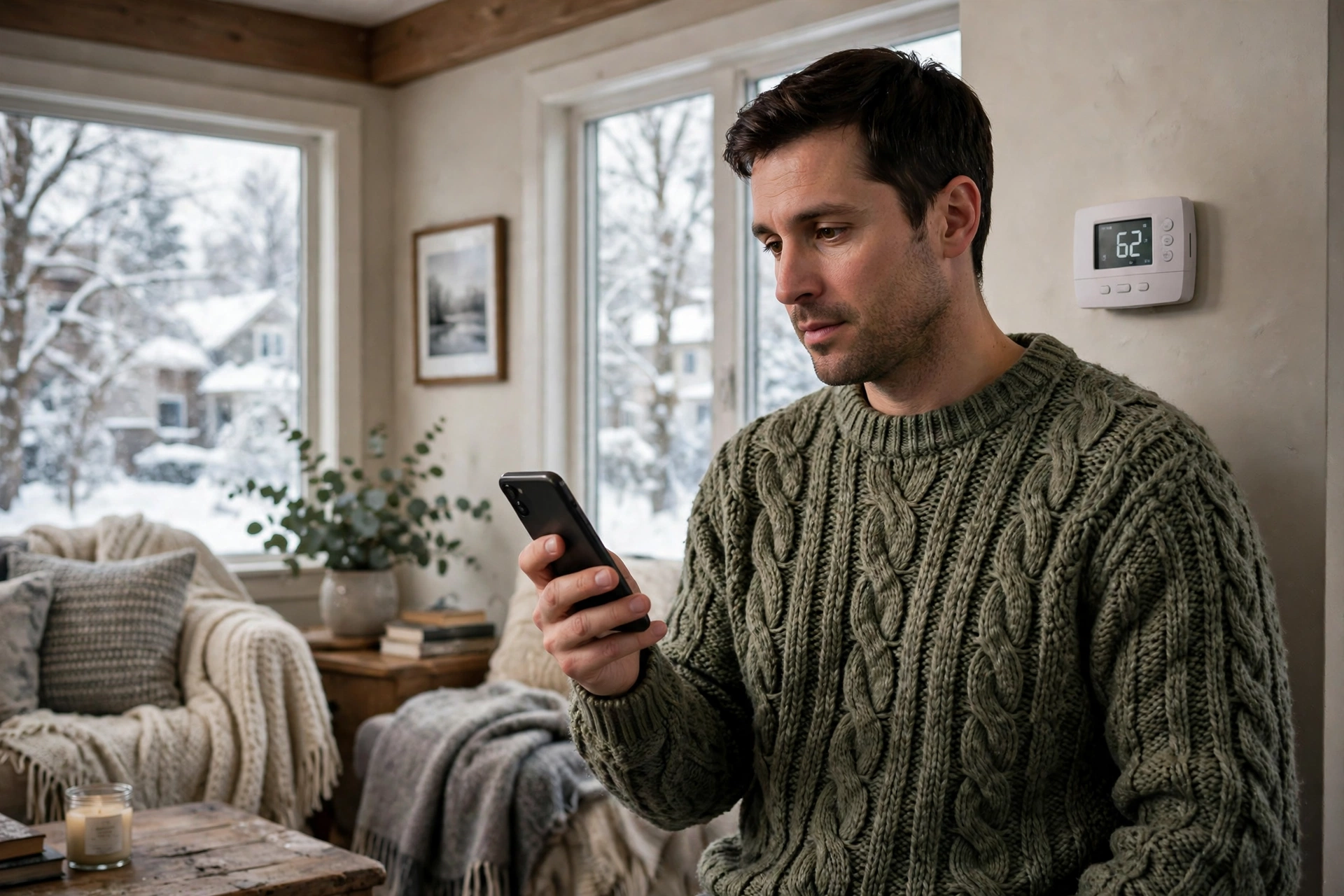
Babies, young children, older adults, and anyone with a breathing or heart condition lose heat faster and feel the cold sooner. If the house is dropping fast and someone in one of those groups is at home, do not wait to see if it warms up on its own.
If the thermostat keeps dropping and the furnace is not producing heat at all, the house will keep cooling. In Everett, that matters most on a freezing night, when pipes in an unheated basement or an exterior wall can freeze.
A gas smell, a carbon monoxide alarm, smoke, or a strong electrical burning smell changes everything. Those are not heating problems anymore. They are safety problems, and they come first.
A furnace that still heats, even if it is noisy or uneven, is usually urgent but not an emergency. The same goes for a slightly cool room, a thermostat that needs new batteries, or a filter that is overdue for a change. You still need a repair, but you can usually book it for normal hours.
Do not start by taking the furnace apart. Start by checking the simple things that stop a furnace most often in Everett homes, and do it calmly.
It sounds too simple, and that is exactly why it gets missed. Make sure the thermostat is on Heat, not Cool or Off, and set a few degrees above the current room temperature. If the screen is blank, change the batteries if it uses them.
Leave it there. A blank thermostat can mean a tripped breaker, a blown fuse on the furnace control board, or a power problem at the furnace itself. Note what you see and tell the technician when you call.
Most furnaces in Everett have a light-switch-style service switch near the unit, often in the basement. It gets bumped while moving boxes or doing laundry. Make sure it is on.
Find the breaker labelled furnace or heating. If it has tripped, reset it once. If it trips again straight away, leave it off and call for help. Repeatedly resetting a breaker that keeps tripping is not a fix.
A filter clogged with dust can choke airflow, overheat the furnace, and trip the limit switch that shuts the system down for safety. If the filter looks dark and blocked, replace it with the same size. If the furnace still will not run after that, do not keep trying to restart it again and again.
Do not open the gas valve further, do not bypass a safety switch, and do not keep hitting reset on a furnace that has locked out. A lockout is the furnace telling you something is wrong. A technician needs to read that signal, not have it cleared away.
For a short time, in a mild cold snap, most healthy adults can stay warm with layers, blankets, and by closing off unused rooms. That changes quickly when it is below freezing outside, when the house has poor insulation, or when the power is out as well.
There is no single number that fits every home, but the direction matters more than the number. If the indoor temperature is falling steadily, if water pipes are on an exterior wall, or if you can see your breath indoors, it is time to make a plan — either get the heat fixed quickly or move to somewhere warm until it is fixed.
Close doors to rooms you are not using. Keep curtains closed at night. Put towels at the bottom of drafty doors. Let the kitchen and bathroom taps drip very slightly if pipes are at risk, and open the cabinet doors under sinks on exterior walls so warm air can reach the pipes.
A space heater can help one room, but it is not a replacement for a furnace. Keep it well away from bedding, curtains, and furniture, never leave it running unattended or while you sleep, and never use an oven or stove to heat the house. That creates carbon monoxide, and it is one of the most dangerous things you can do in a no-heat emergency.
Everett homes are older than most in America, and many heating systems have been patched and repaired over decades. That history shows up in the same few failures, winter after winter.
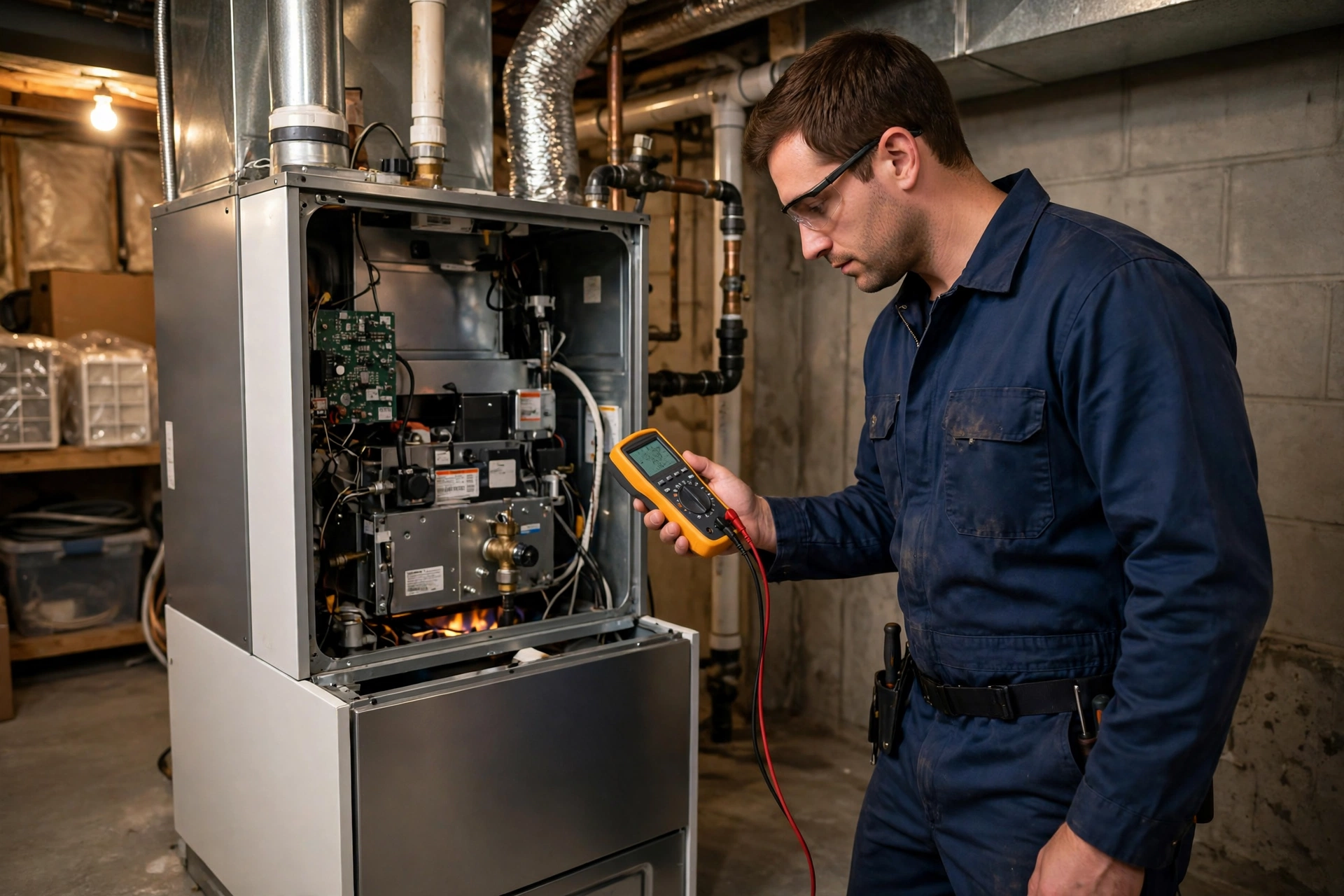
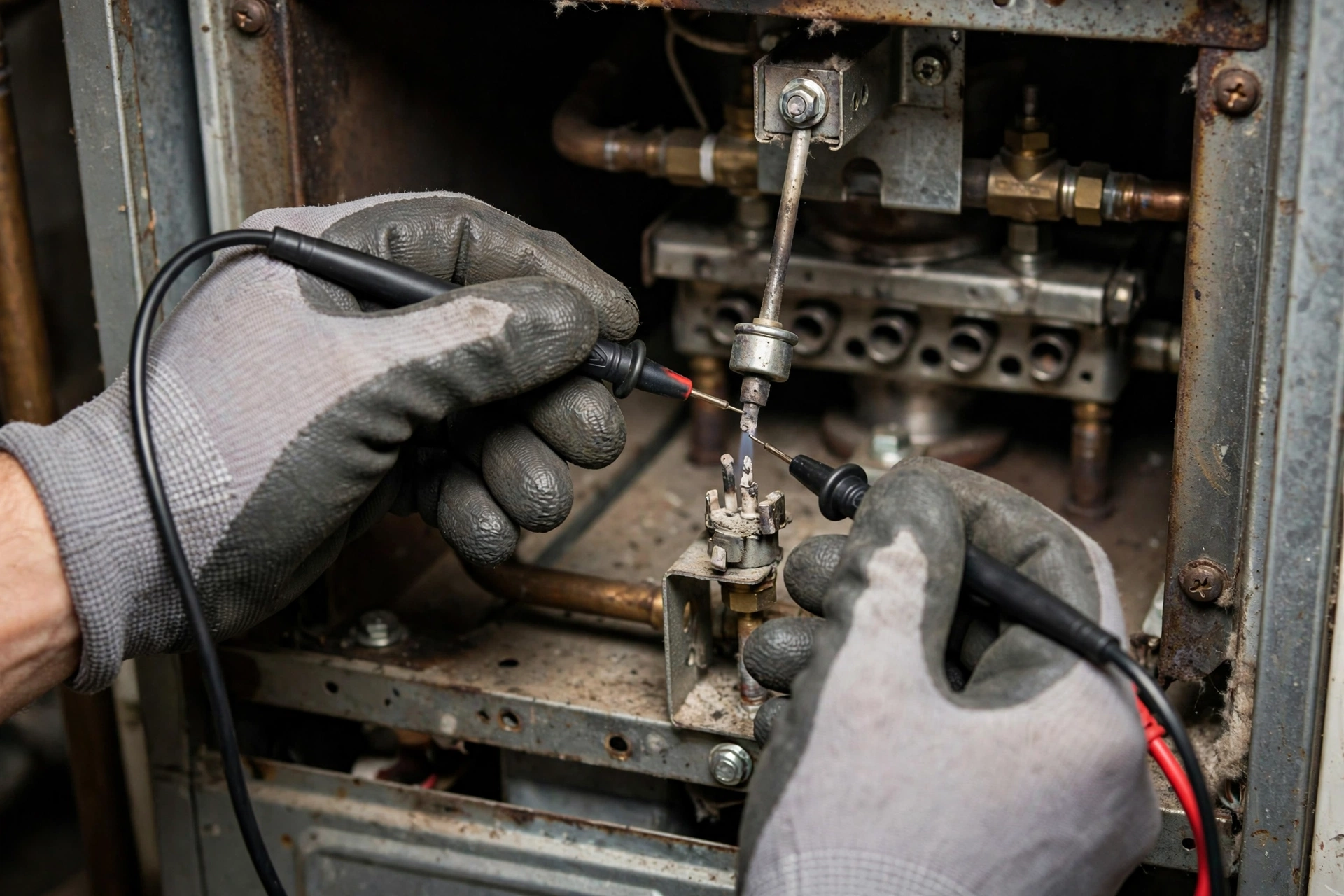
The igniter lights the gas. The flame sensor proves the flame is there. If the igniter is cracked or worn, the furnace will try to start, fail to light, and shut down. If the flame sensor is dirty or coated, the burners may light for a few seconds and then go out. Both are common, and both need a proper test with a multimeter — not a guess.
Thermostat calls for heat, the inducer fan runs, the pressure switch closes, the igniter glows, the gas valve opens, the flame sensor confirms the flame, and then the blower starts. If the sequence stops anywhere along that chain, the furnace locks out for safety.
This is the most preventable emergency we see. A clogged filter restricts airflow, the heat exchanger overheats, and the limit switch shuts the furnace down to protect it. Change the filter regularly, and you remove one of the simplest causes of a no-heat call.
The blower motor moves warm air through your ducts. When its bearings wear out or its capacitor fails, you may hear humming without the fan turning, grinding, or no airflow at all even though the burners are lit. The house stays cold because the heat never leaves the furnace.
A thermostat that is not communicating, a control board fuse that has blown, or a loose wire can stop the whole system. These are not visible from the outside, which is why a technician checks voltage, error codes, and the board before replacing any part.
High-efficiency furnaces vent outside and drain condensate water. Snow, ice, or debris blocking that vent, or a frozen condensate line in an unheated space, can shut the furnace down. Keep outside vents clear of snow after a storm, and do not ignore a furnace that starts and stops repeatedly.
When a furnace will not turn on, homeowners often assume the worst. In practice, the cause is often in the first three steps above — thermostat, power, filter — or in the ignition parts.
If you hear the small inducer fan start but nothing else happens, the problem is likely further along the ignition sequence — pressure switch, igniter, or gas valve.
Many furnaces have a small light on the control board visible through a sight glass. Note how many times it blinks, and whether it is steady or flashing. That code helps a technician diagnose the fault faster. Do not clear it by turning the power off and on repeatedly.
If you have checked the thermostat, the switch, the breaker once, and the filter, and the furnace still will not start, stop there. Continuing to reset it can mask the fault and, in a gas furnace, can allow gas to build up. Call Everett Air HVAC at (617) 665-6978 and describe exactly what you heard and saw.
Cold air from the vents does not always mean the furnace is broken. Sometimes it means the fan is set to On instead of Auto, so the blower runs even when the burners are off.
Check that the fan is on Auto. On Auto, the blower only runs when the furnace is heating. On On, it runs all the time, and the air will feel cold between heating cycles.
If the burners light and then go out within seconds, cold air follows. That short flame is often a dirty flame sensor — a small rod that needs cleaning or replacement — or an igniter that is not lighting the burners reliably.
In a triple-decker, long duct runs and leaks can mean the top floor gets cold air while the ground floor stays warm. That is not always a furnace failure. It can be airflow, insulation, or a blower that is not moving enough air. A technician can test airflow room by room instead of guessing.
A furnace should hum quietly. New noises are a warning, and some of them mean you should turn the system off.
A loud bang on startup can be delayed ignition — gas building up before it lights. Turn the furnace off at the switch and call for help. Do not keep starting it to see if the noise goes away.
Grinding usually points to worn blower motor bearings. Squealing can be a belt or a motor struggling to start. Both get worse if you keep running the furnace, and a seized motor can lead to a larger repair.
Rattling can be a loose panel or a loose part. Humming without the fan turning often points to a failed capacitor or a seized motor. Turn the power off at the breaker if the humming is loud or if you smell burning, and call for an emergency visit.
Tell the technician when the noise started, whether it happens on startup, while running, or on shutdown, and whether there is any smell with it. That detail saves diagnostic time.
Smells are the most important part of this guide. Get this section right, and you protect your family. Get it wrong, and you take a risk you do not need to take.
If you smell gas — often described as rotten eggs — do not flip switches, do not light matches, do not use your phone inside, and do not try to find the leak yourself. Get everyone out, go outside, and call your gas company and 911 from outside. Gas companies respond to leak calls around the clock.
Carbon monoxide has no smell and no colour. Your detector is the only warning you get. If it alarms, get everyone out immediately and call 911 from outside. Do not go back in until emergency services say it is safe. Common furnace-related sources include a cracked heat exchanger, a blocked flue, or backdrafting.
Press the test button, replace batteries when needed, and replace the detector itself when it reaches the end of its life. A detector that has not been tested is not a safety plan.
A light dusty smell the first time the furnace runs in autumn is often dust burning off the heat exchanger. It should fade quickly. If it is strong, lasts, or comes with smoke, turn the furnace off and call for help.
A sharp electrical smell can mean melting wire insulation, a failing motor, or a short circuit. Turn the furnace off at the power switch and the breaker. If the smell is strong or you see smoke, leave the house and call 911.
Knowing what happens next takes some of the stress out of a cold night. A good emergency visit is diagnostic first, and repair second.
When you call Everett Air HVAC at (617) 665-6978, we ask for your address, what the furnace is doing or not doing, any smell or alarm, and whether anyone in the house is at risk from the cold. That helps us prioritise the call and arrive prepared.
The technician inspects the furnace, checks the thermostat and power, reads any error code on the control board, and tests components — igniter resistance, flame sensor signal, pressure switch, gas valve, blower motor, and capacitor — with a multimeter. The aim is to find the actual failure, not just the symptom.
You should hear, in plain language, what failed, why it failed, and what the repair involves. If a part needs to be ordered, you should hear that too, and what can be done safely in the meantime.
After the repair, the technician runs the furnace through a full heating cycle, checks that the burners light cleanly, that the flame sensor holds, that the blower moves air properly, and that there is no gas smell or carbon monoxide concern. A repair is not finished until the system has been tested through a complete cycle.
Sometimes the honest answer is that a furnace has a cracked heat exchanger or a failure that makes it unsafe to run. In that case, a technician should explain why it cannot be run safely, what the next options are, and how to keep the house safe until a replacement can be arranged. That conversation should never be rushed or pressured.
Everett is different from a new suburb. More than a quarter of homes here are in three- and four-unit buildings, and many houses were built in the early twentieth century. That shapes how heating emergencies happen — and how they are fixed.
Warm air rises, but in a triple-decker the top floor is also the most exposed to wind and cold, with a roof above it and long duct runs below it. If airflow is weak, the top floor feels it first. An emergency visit here often includes checking dampers, duct airflow, and whether the blower is moving enough air to reach the top floor.
Older gravity and atmospheric systems, converted oil systems, and furnaces that have been repaired many times over decades need a diagnostic-first approach. A part that fits a newer high-efficiency furnace may not fit an older unit, and wiring or venting that was acceptable decades ago may now be a safety concern.
Do not assume a quick part swap will solve an older system. A technician who takes time to test the whole system — not just the failed part — is protecting you from a second breakdown the next cold night.
If you rent, tell your landlord or property manager as soon as the heat fails, and keep a record of when you called. If you are a landlord, a no-heat call in winter is urgent for your tenants' safety and for the building's pipes. Everett Air HVAC works with homeowners, landlords, and property managers across Everett and nearby towns.
People often say "the heat is out" without knowing which system they have. The emergency steps are different for each one.
Gas furnaces use an igniter, gas valve, flame sensor, and heat exchanger. Gas smell, delayed ignition, and carbon monoxide risk are specific to gas systems, and they are the reason you should never work on gas components yourself.
A boiler heats water, not air. No heat from radiators, cold radiators, leaks, or a boiler that keeps shutting down can point to low water pressure, a failed circulator, or a blocked vent. Do not keep resetting a boiler that is leaking water.
A heat pump that stops heating in freezing weather, ices over heavily, or blows cold air may have a defrost, refrigerant, or auxiliary heat problem. Turn it off if it is making loud grinding noises or tripping the breaker, and call for help.
A mini-split that serves one room can fail on its own while the rest of the house stays warm. Check the remote, the filter, and the outdoor unit for snow or ice blocking airflow. If the indoor unit is leaking water or the outdoor unit is iced over and not defrosting, call a technician.
In an emergency, you do not have time to compare ten companies. You need a short checklist you can use in two minutes.
Choose a company that actually serves Everett, holds the right Massachusetts credentials, and carries liability insurance and workers' compensation. Ask for the business address — Everett Air HVAC is at 15 Ellsworth St, Everett, MA 02149 — and be cautious of any company with no physical address or unmarked vehicles.
A trustworthy company explains what it found, what the repair involves, and what happens if a part needs ordering, before any work starts. It does not push a full replacement before diagnosing the problem, and it does not refuse to give you a written explanation of the work.
Read recent reviews, not just the star rating. Look for how the company responds when something goes wrong. A company that answers complaints calmly and fixes problems is usually a safer choice than one with only perfect reviews and no response to criticism.
High-pressure sales, insisting on cash only, or refusing to provide a written record of the work are red flags. For a true emergency, getting the heat back safely comes first. For any large recommended work after that, you can always get a second opinion.
The visit does not end when the furnace starts again. It ends when the system has been tested and you know what to watch for.
The technician should run the furnace through a full cycle — call for heat, ignition, burner operation, blower start, and shutdown — and check that the temperature rises steadily and the system does not short-cycle or lock out again.
Carbon monoxide, gas connections, venting, and the heat exchanger should all be part of the post-repair check, especially in an older Everett home. If anything was found that needs attention soon, you should hear about it in plain language, with a clear next step.
Listen for new noises, check that every room is warming evenly, and note if the furnace starts and stops more often than usual. If the same problem returns, call back and describe what happened — do not keep resetting the system yourself.
You cannot prevent every failure, but you can remove the most common causes. Most of the emergency calls we see in Everett could have been caught earlier.
Check the filter monthly in winter, and change it when it looks dirty. A clean filter protects airflow, the heat exchanger, and the blower motor.
A tune-up in early autumn is the best time to catch a worn igniter, a dirty flame sensor, a weak capacitor, or a cracked part before the first cold snap. It is a routine visit, not an emergency, and it gives you time to plan if something needs attention.
Keep outside vents clear of snow and ice, keep the area around the furnace free of boxes and clutter, and do not block return vents with furniture. A furnace needs air to work safely.
Take a photo of the furnace model and serial number, note the filter size, and keep the manual in a known place. When you call for help, that information helps a technician arrive with the right part.
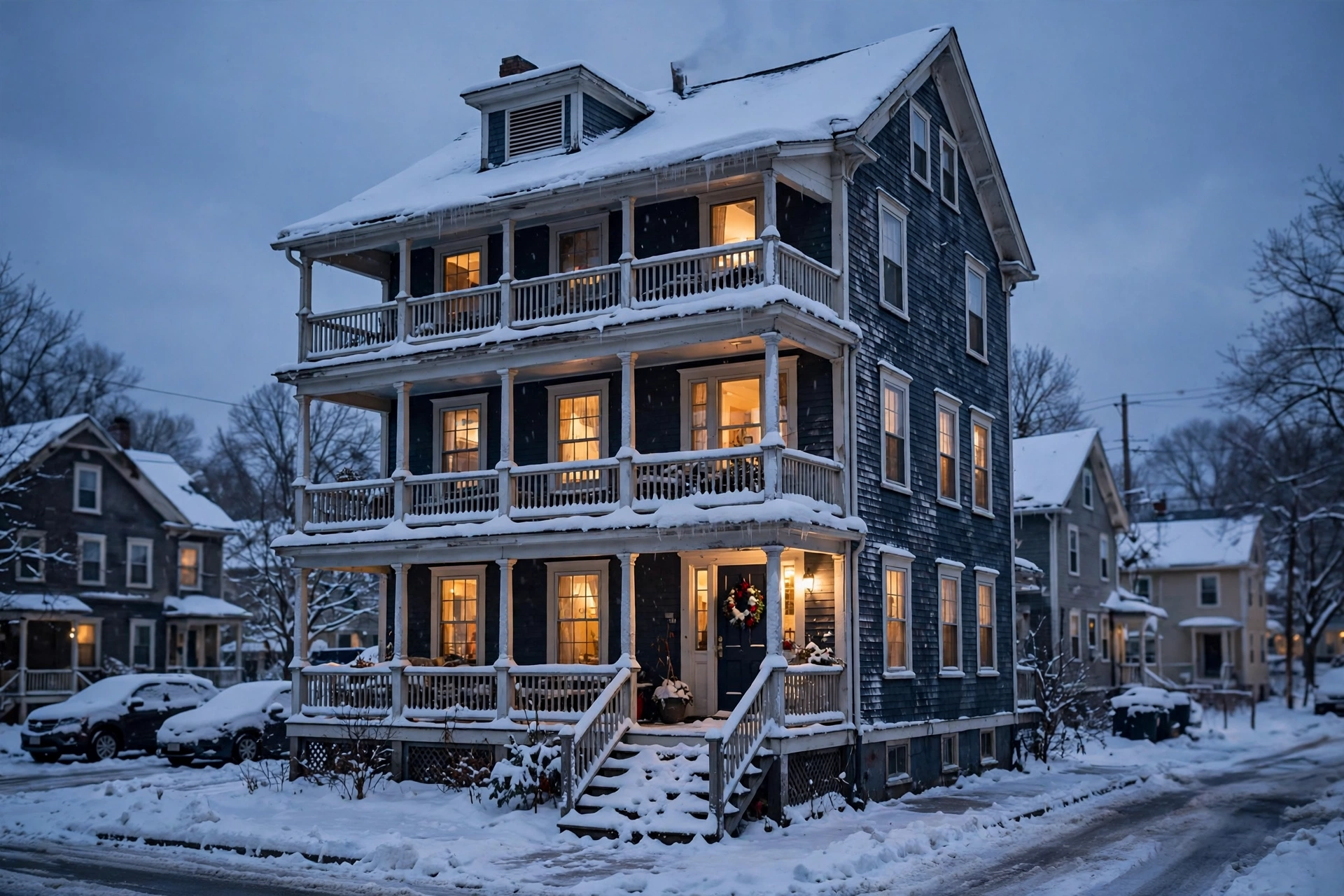
Everett Air HVAC serves Everett and the towns around it — Malden, Medford, Chelsea, Revere, Somerville, Lynn, Melrose, Saugus, Winthrop, and nearby communities. If you are in Everett, call (617) 665-6978 for emergency furnace repair. If you are in a nearby town, call and tell us where you are — we will tell you honestly if we can reach you and when.
A local technician knows Everett's housing stock — the triple-deckers, the older basements, the long duct runs, the converted systems — and does not need to learn it on your coldest night. That local experience is part of what makes a repair faster and more accurate.
Your address, the type of system you have if you know it, what the furnace is doing, any smell or alarm, and whether anyone in the house is at risk from the cold. You do not need to know the technical terms. Describe what you see and hear, and we will take it from there.
Describe what your furnace is doing, and we will talk through the next step — a short conversation beats a long search when the heat is out.
A furnace that runs but sends cool air may have a thermostat, airflow, ignition, or control issue. Start with safe observations, then arrange diagnosis if the cause is not clear.
Read the guide →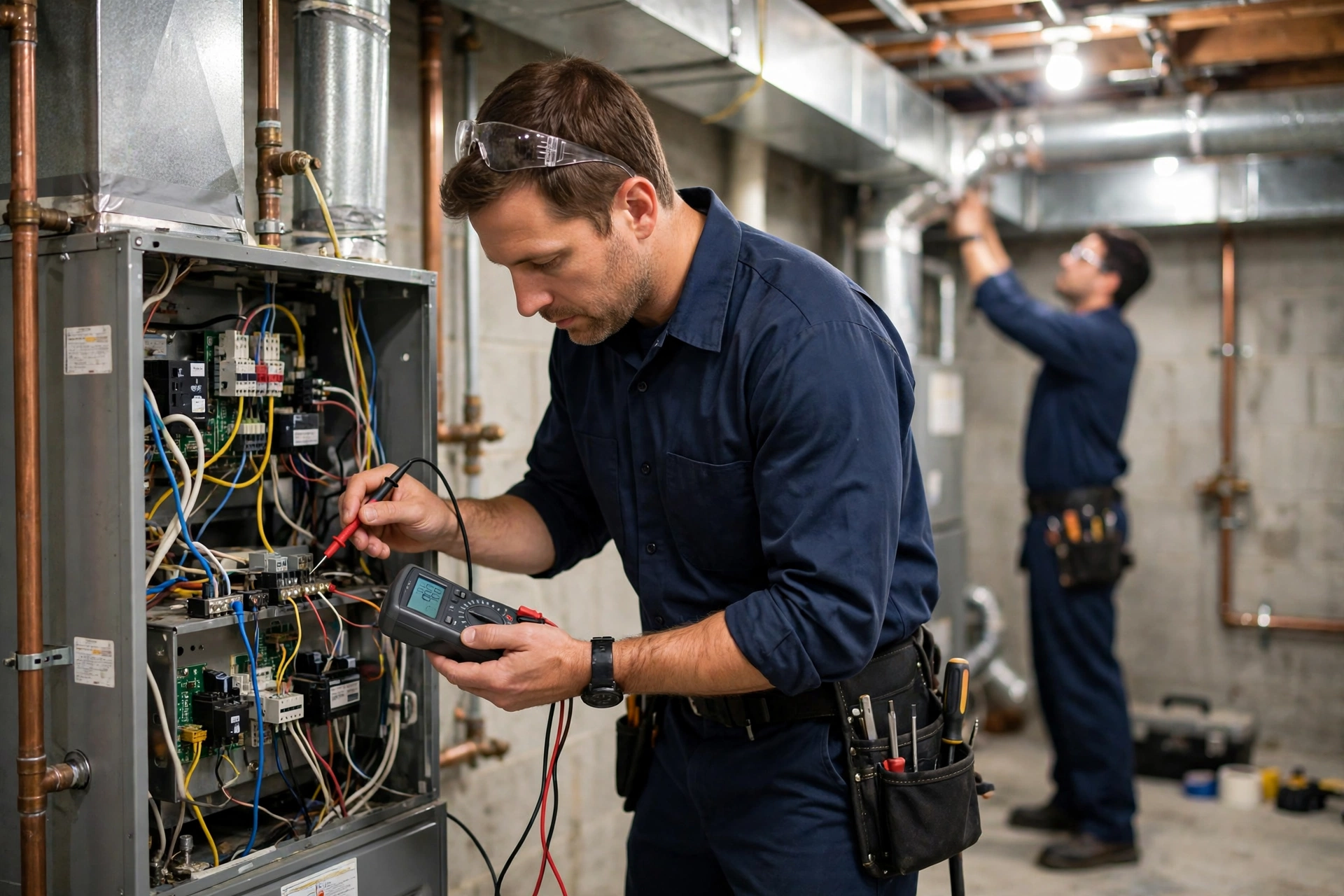
A furnace that does not start may have a thermostat, power, ignition, condensate, or safety-control issue. Check the safe basics, note any indicator code, and avoid repeated resets.
Read the guide →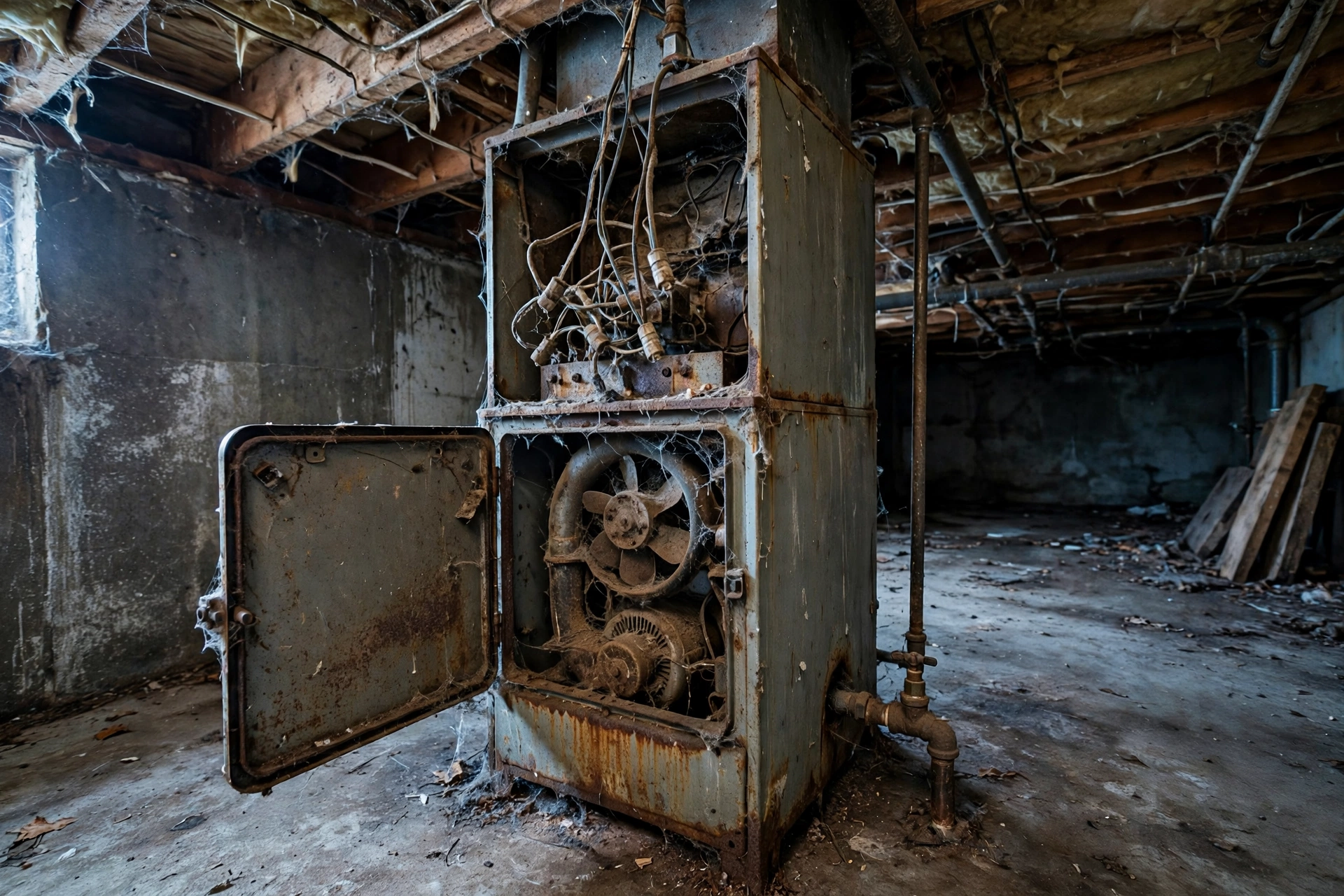
Furnace banging, rattling, or squealing in Everett, MA? Learn what each sound usually means, what to note, and when to switch off and call.
Read the full article →Heating and cooling services for Everett homes. Each service has a clear description, a related photo, and a direct link to the full page.
No heat, cold air, short cycling, ignition faults, blower failure, and strange furnace noises in Everett homes — diagnosed and repaired by Everett Air HVAC.
Read More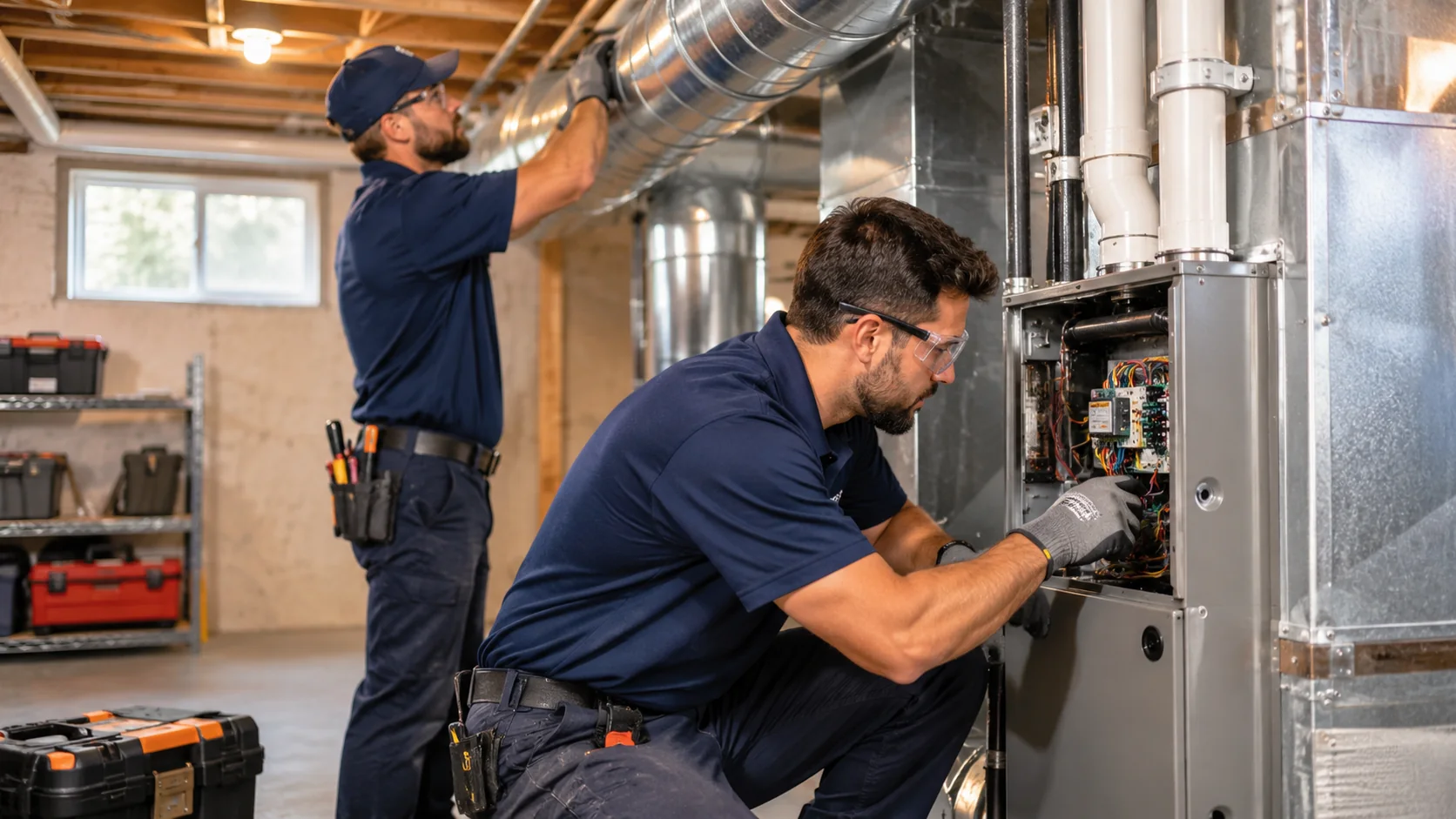
Seasonal furnace maintenance in Everett, MA: safety checks, cleaning, airflow, ignition, and controls to keep your furnace reliable through a New England winter.
Read More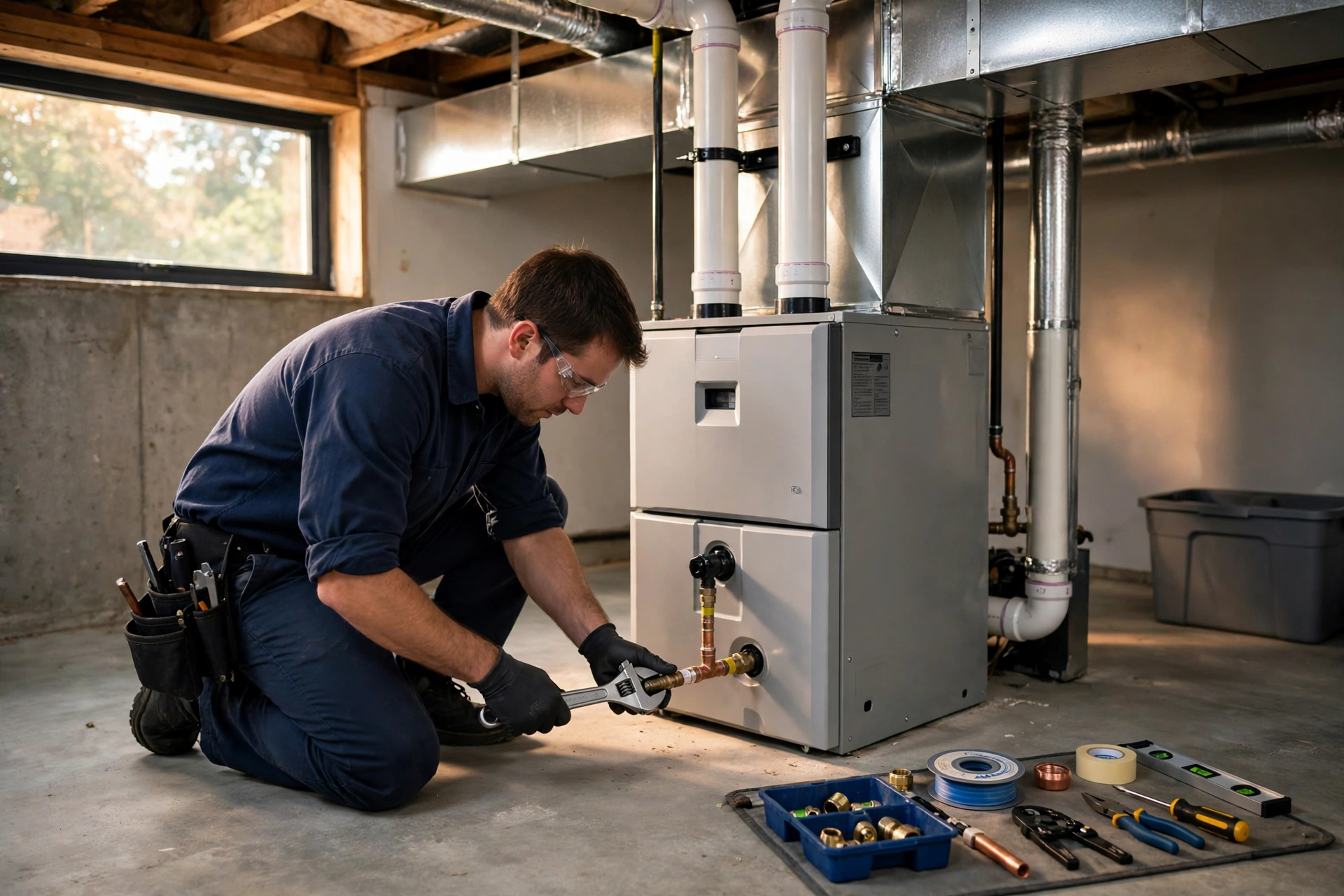
Furnace replacement in Everett, MA: right-sized, high-efficiency systems, honest repair-vs-replace advice, and clean installation with testing.
Read More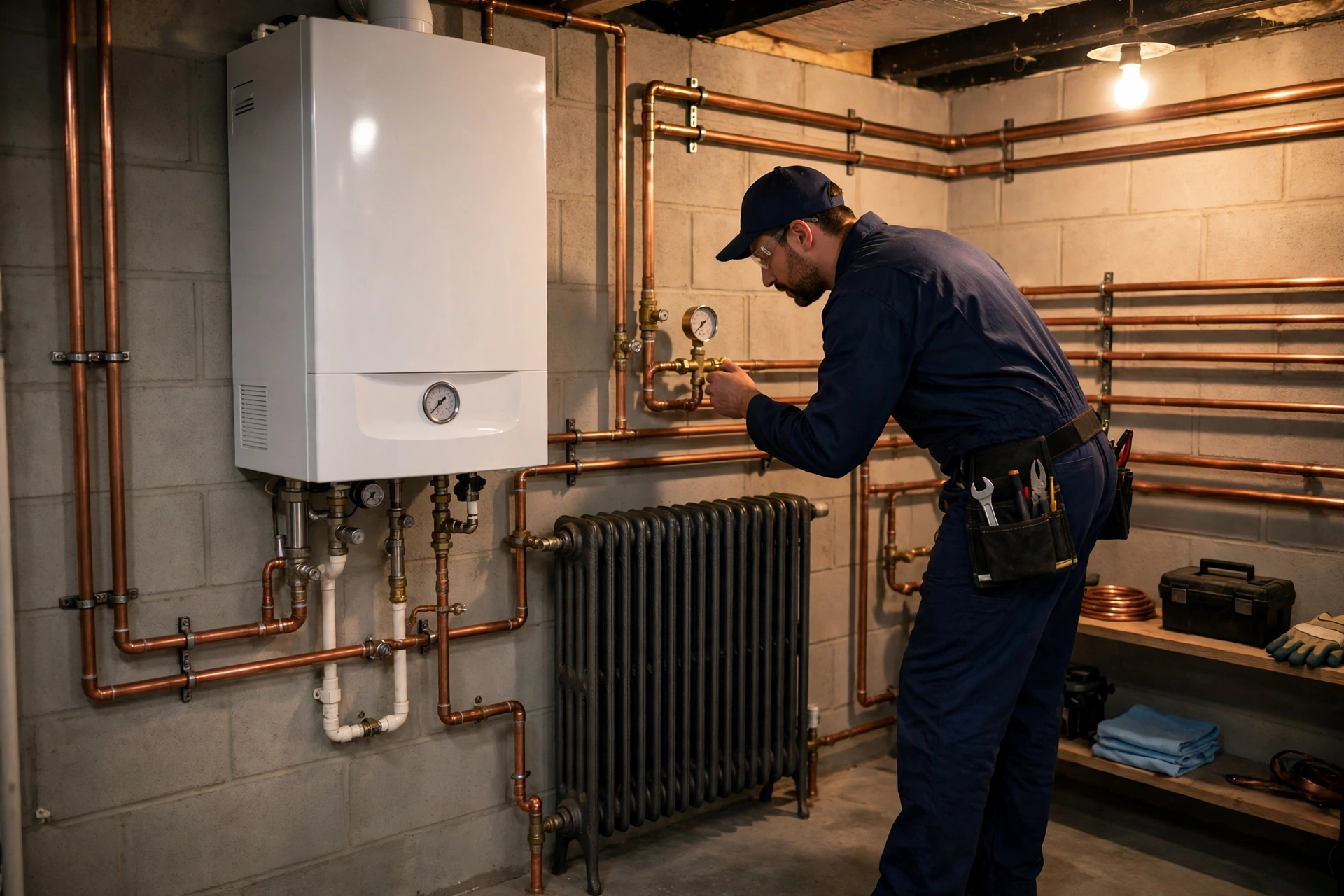
Boiler repair and maintenance in Everett, MA for radiators and baseboard heating in older homes, triple-deckers, and multi-family properties.
Read More
Whole-system heating repair in Everett, MA: uneven rooms, cold spots, thermostat and control faults, and systems that will not keep up in cold weather.
Read More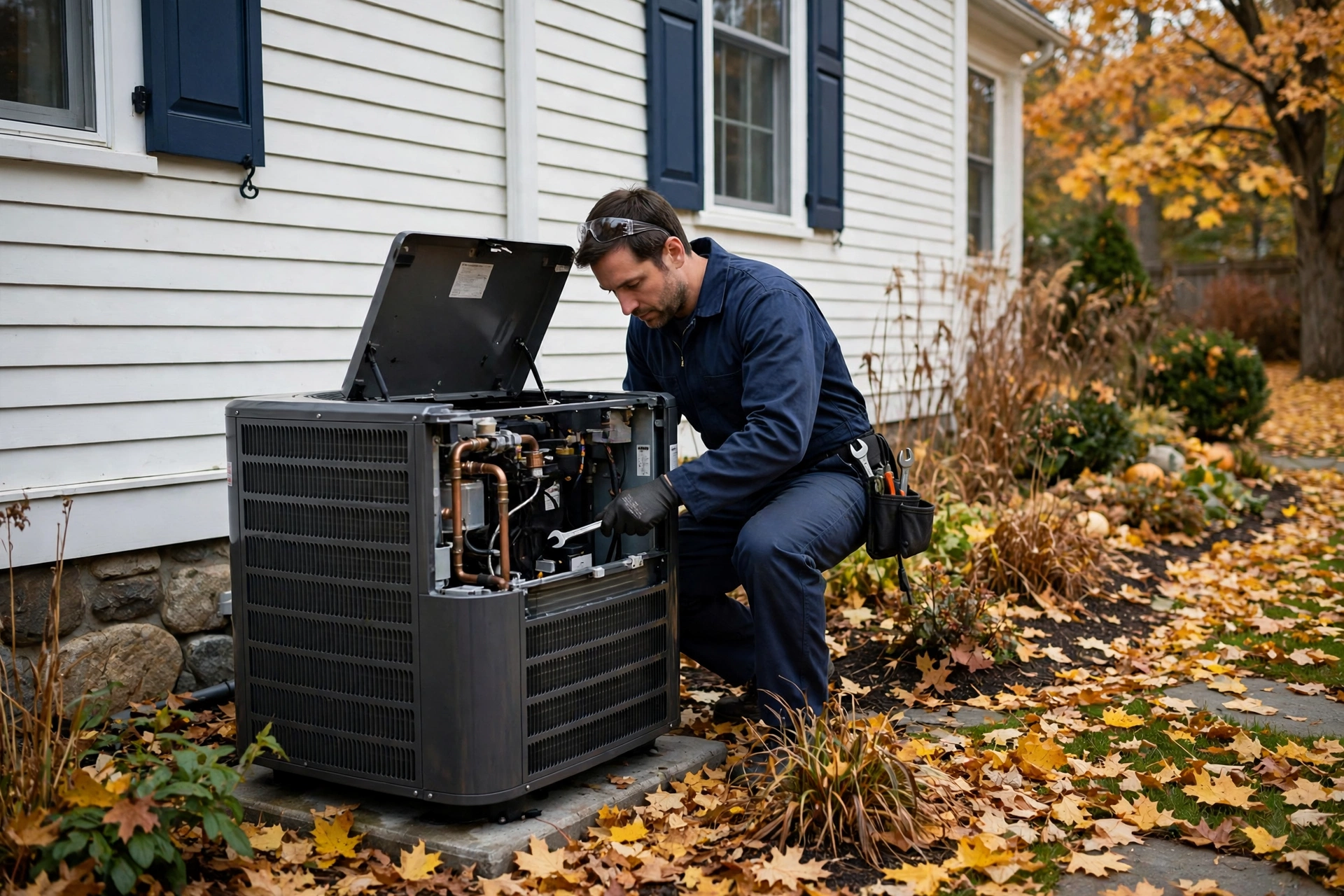
Heat pump repair, maintenance, and installation in Everett, MA for efficient year-round heating and cooling in homes with and without ductwork.
Read More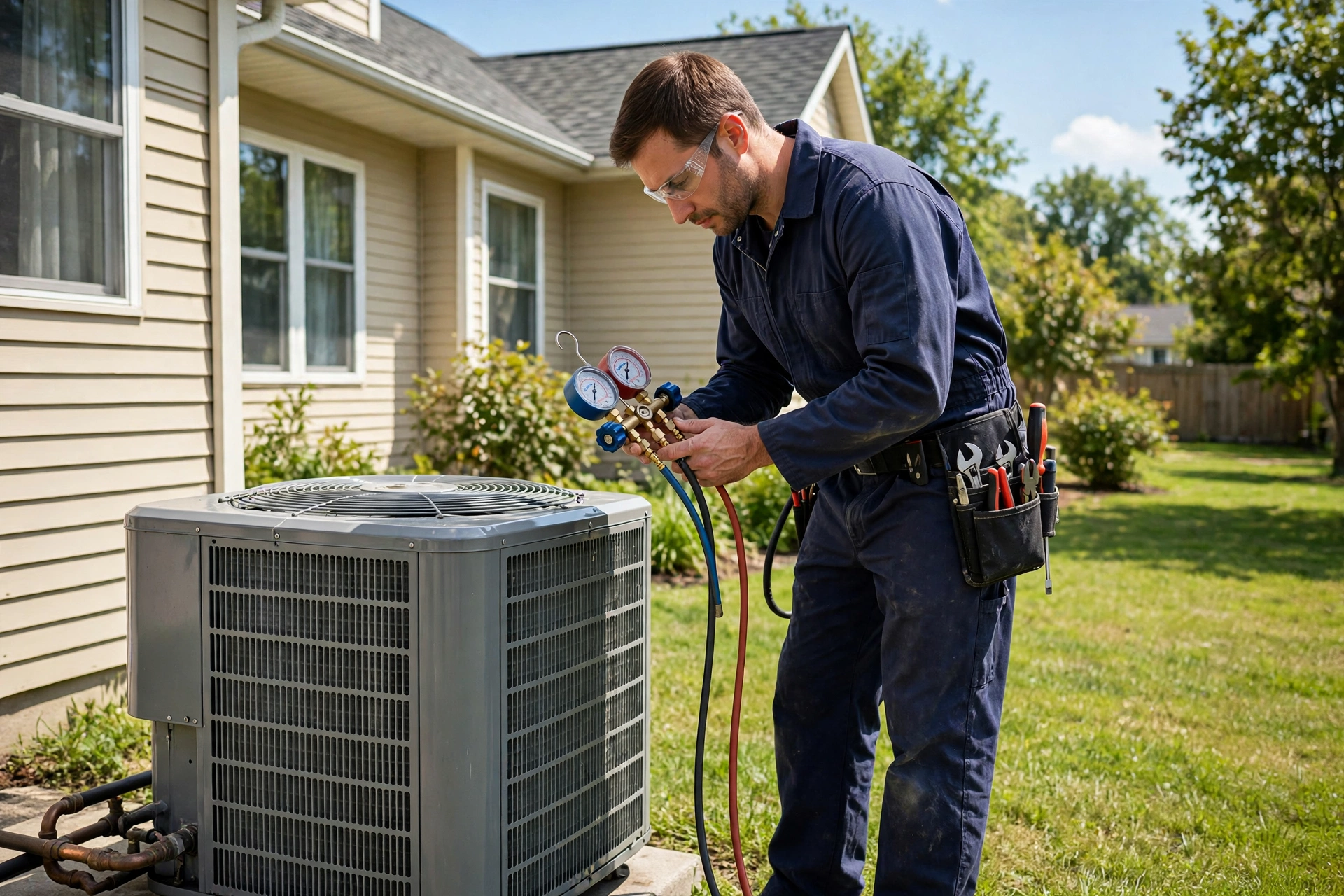
Air conditioning repair, maintenance, and installation in Everett, MA: airflow, refrigerant, controls, and drain faults handled before the next heatwave.
Read More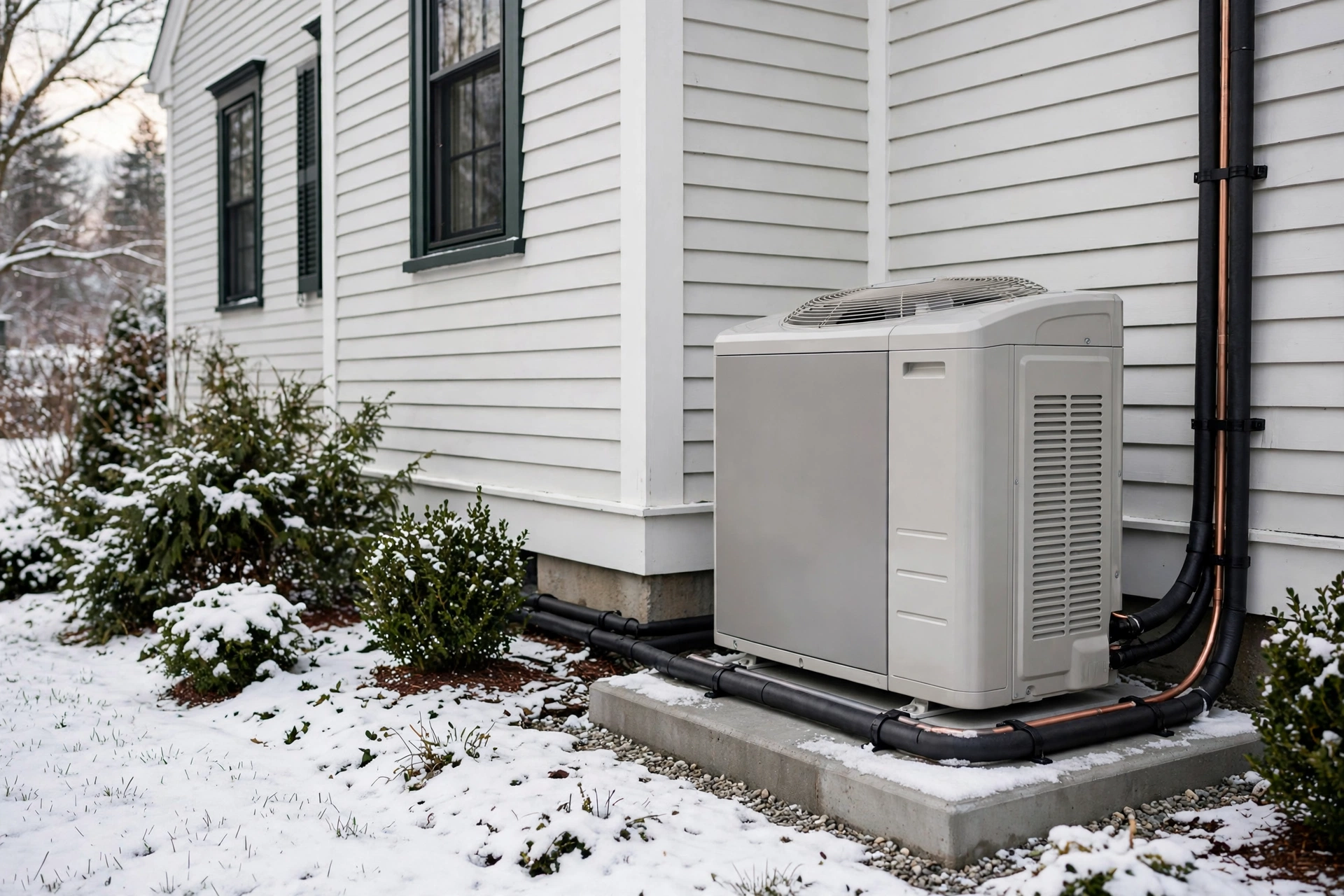
Ductless mini-split repair, maintenance, and installation in Everett, MA for rooms, additions, and triple-deckers without ductwork.
Read More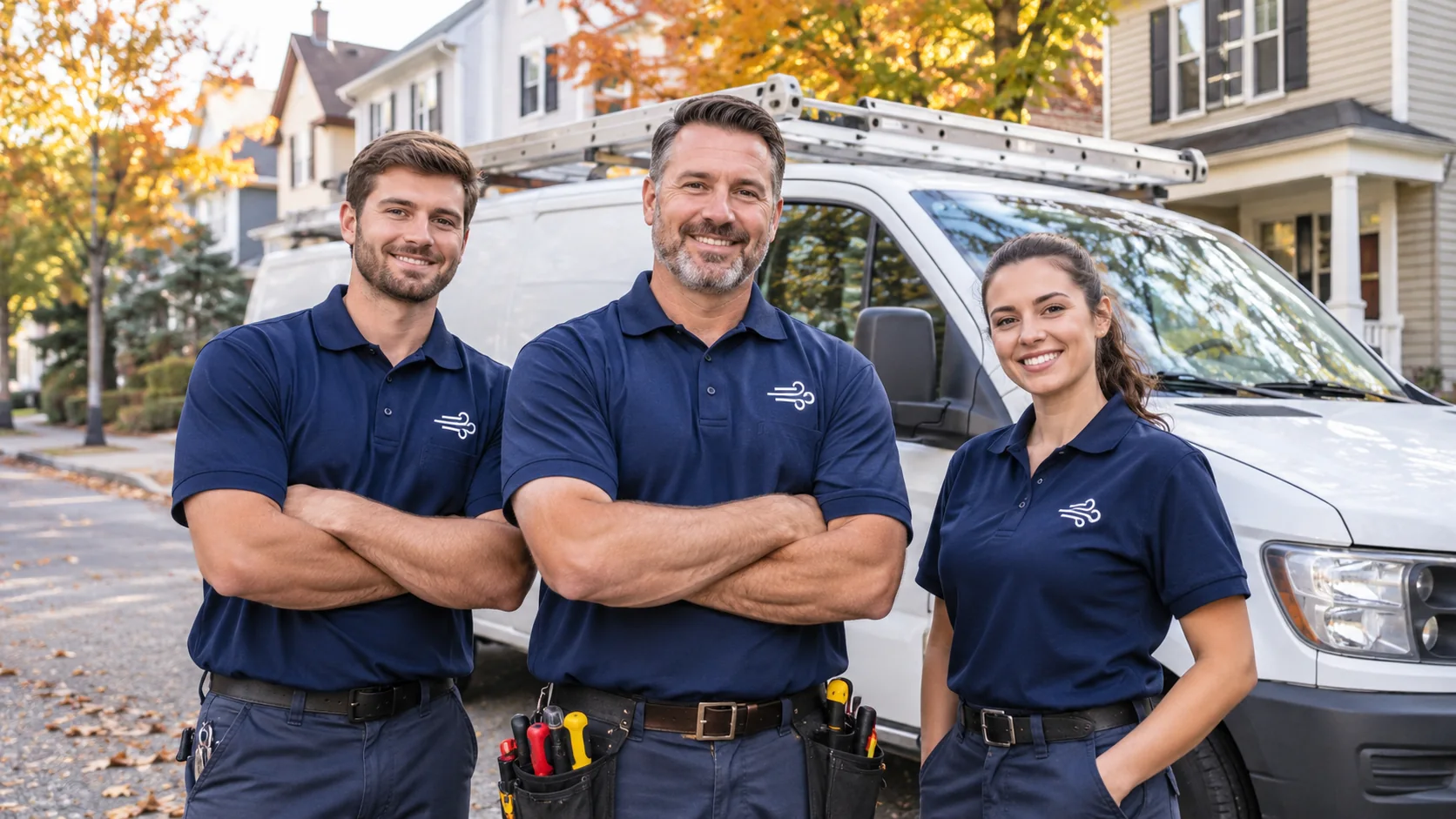
Ductwork inspection, sealing, repair, and airflow balancing in Everett, MA so heated and cooled air reaches every room.
Read MoreShort answers to the questions Everett homeowners ask most.
It depends on the weather and who is at home. If it is below freezing, if the temperature is falling fast, or if children, older adults, or anyone with a health condition is at home, treat it as an emergency. If it is mild outside and the house is still warm, try the safe checks above and book a service call during normal hours.
For a true emergency, the aim is to get to you as quickly as the schedule and the weather allow. When you call, we will give you a realistic arrival window based on where you are and how many emergency calls are already in progress. If you smell gas or your carbon monoxide alarm is going off, leave first and call 911 — do not wait for a technician.
If the noise is a loud bang on startup, grinding, or humming with a burning smell, turn the furnace off at the switch and call for help. If it is a light rattle from a loose panel, you can turn it off and note it for the technician. When in doubt, turn it off and call.
No — not safely. Igniters are fragile and carry high voltage, flame sensors sit inside a gas appliance, and both need proper testing. Simple homeowner tasks are changing the filter, changing thermostat batteries, and checking the breaker once. Anything involving gas, electrical components, the heat exchanger, or the blower motor should be left to a licensed professional.
Leave the house immediately, get everyone outside, and call 911 from outside. Do not open windows to clear it first, do not go back in to grab things, and do not re-enter until emergency services say it is safe.
Change the filter on schedule, book a tune-up before winter, keep vents clear, and do not ignore early warnings — a new noise, short cycling, or a room that never warms up. Those small signs are often the furnace telling you a part is wearing out.
Tell us what your furnace is doing, and we will talk through the next step.