Emergency Furnace Repair in Everett, MA
What counts as a furnace emergency, what to check safely in the first minutes, and what happens on an emergency visit. Call (617) 665-6978.
Read the guide →Your furnace tries to start, then stops — and tries again. This guide explains what a furnace igniter does, the signs it is failing, what to check safely, and what a proper repair visit looks like.
You turn the thermostat up, the furnace hums, you hear it try — and then nothing. A minute later it tries again, and fails again. That repeated clicking or humming with no heat is one of the most common furnace faults in Everett homes, and in most cases the part at the centre of it is small, fragile, and inexpensive compared with the furnace around it: the igniter.
This guide explains what a furnace igniter does, how to tell when it is failing, what is safe to check yourself, and what a proper furnace repair visit looks like when the igniter is the problem. It is written for Everett homeowners — from the triple-deckers near Broadway to the single-family homes around Ellsworth Street — in plain language, with no guesswork and no pressure.
A furnace igniter is the part that lights the gas in your furnace. Without it, the burners never light, the heat exchanger never warms up, and the blower has nothing warm to send through your home. It is a small component — often no bigger than a finger — and it does one job, thousands of times every winter.
When your thermostat calls for heat, the furnace runs through a short safety sequence before any gas is released. The igniter is the part that turns that sequence into flame. It either glows white-hot or throws a spark at exactly the right moment, and the gas valve opens only when the igniter is ready.
Every heating cycle starts with the igniter. In a cold Massachusetts winter, a furnace can cycle dozens of times a day. Each cycle heats the igniter to an extreme temperature and then lets it cool again. That repeated heating and cooling is what eventually wears it out. It is not a sign that your furnace is badly made — it is a wear part, like brake pads on a car.
Older furnaces kept a small flame burning all the time — a standing pilot light — so the burners could light whenever heat was needed. Modern furnaces replaced that with electronic ignition because a pilot light wastes gas around the clock and can go out in a draught. If your furnace was installed in the last twenty years or so, it almost certainly uses an electronic igniter instead.
Some older Everett furnaces still have a standing pilot. If yours does, a pilot that keeps going out usually points to a thermocouple or a draught problem rather than an igniter fault, and the rest of this guide still helps you describe the symptoms accurately when you call.
The igniter sits inside the burner compartment, right next to the burner tubes, behind the furnace's front access panel. You will not see it in normal use. On many furnaces there is a small sight glass in the panel — a round window you can look through while the furnace tries to start. If you can see an orange glow through that window, the igniter is at least heating up. If you see nothing, it may have failed.
That position matters for two reasons. First, the igniter lives in the hottest, dirtiest part of the furnace, which is why it wears out. Second, reaching it means opening a gas appliance and working around high voltage — which is why anything beyond looking and listening should be left to a technician.
No igniter lasts forever. The ceramic material that glows is deliberately fragile, and it becomes more brittle with every heating cycle. When it fails, it usually fails suddenly — the furnace worked fine yesterday and will not light today. That sudden failure is normal, and it is not a sign that something else is badly wrong with your furnace.
A failing igniter gives clear symptoms if you know what to listen and look for. Most homeowners notice the pattern before they know the name of the part: the furnace tries, and tries, and nothing warms up.
This is the classic igniter symptom. The inducer fan runs, you hear the furnace begin its startup sequence, and then it stops and goes quiet. A minute or two later it tries again. That repeated attempt-and-stop pattern is the furnace's safety system working as designed: it tried to light, could not confirm a flame, and shut the gas off. If your furnace will not turn on at all, the safe checks in that guide are the right place to start before you call.
If the burners light and then die within a few seconds, the igniter may have done its job and something else — usually the flame sensor — is failing to confirm the flame. This is a different fault from a dead igniter, but homeowners often describe both as "the igniter is broken". A technician tests both parts, because replacing the wrong one wastes your time and leaves the fault in place.
The difference is what you see and hear. A dead igniter means no glow and no flame at all. A flame sensor fault means the burners do light — you see a blue flame — and then the furnace shuts them off after a few seconds. Note which one you observe before you call, because it points the technician in the right direction.
A repeated clicking sound with no flame usually means a spark igniter is trying to light the gas and failing. The click is the spark. If you hear it and there is no flame, the gas valve may not be opening, the igniter may be worn, or the spark may not be reaching the gas. Do not keep letting it click — repeated sparking with gas present is a delayed ignition risk.
Sometimes the blower runs and pushes cool air through the vents while the burners never light. That combination — fan running, no heat — often points to an ignition fault, including a failed igniter. Before you assume the worst, check the simple things first: the thermostat setting, the furnace switch, and the filter. Those checks are covered later in this guide.
Most modern furnaces lock themselves out after three failed ignition attempts. The control board stops trying, and a small light on the board blinks an error code. That lockout is a safety feature, not a fault in itself. If you reset the furnace and it locks out again, the underlying fault is still there, and resetting it again will not fix it.
Not all igniters work the same way, and knowing which type your furnace uses helps you describe the fault and helps the technician bring the right replacement part.
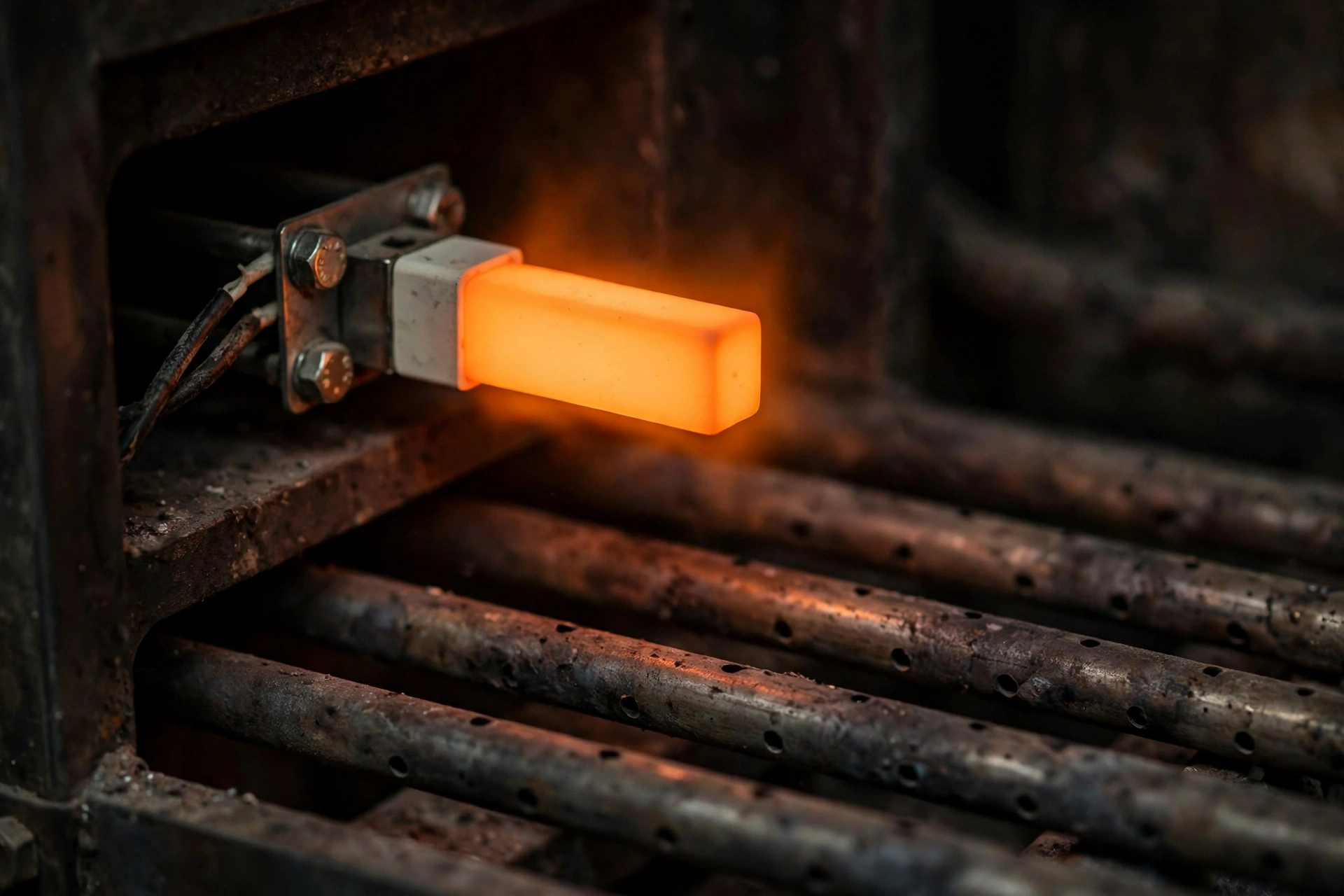
Most gas furnaces installed in the last twenty years use a hot surface igniter. It is a small ceramic element, usually shaped like a flat fork or a rounded bar, that heats to a bright orange glow — hot enough to light gas on contact. You can sometimes see that glow through the sight glass when the furnace starts.
Hot surface igniters are made from one of two ceramic materials. Silicon carbide was the earlier type — it glows brightly but is very brittle and sensitive to being touched. Silicon nitride is the newer type — tougher, longer-lasting, and more resistant to the thermal shock of repeated heating and cooling. A technician matching a replacement will check which type your furnace was designed for, because they are not always interchangeable.
If your furnace starts silently — no clicking — and you can see an orange glow through the sight glass before the burners light, you have a hot surface igniter. If it glows but the burners do not light, the igniter may be too weak to light the gas, or the gas valve may not be opening.
Some furnaces, and most boilers with electronic ignition, use a spark igniter instead. It works like a spark plug: it throws a rapid series of sparks across a small gap to light the gas. The clicking you hear on startup is the spark firing. Spark igniters are less fragile than hot surface igniters, but their electrodes wear, and the gap can widen or foul with use.
Spark ignition is common on boilers, on some high-efficiency furnaces, and on many older systems that were converted from a standing pilot. If your system clicks loudly on every startup and then lights normally, that is the spark igniter doing its job — the fault is only when the clicking continues with no flame.
A standing pilot keeps a small flame burning at all times. It uses no igniter at all. If your furnace has a pilot light and it will not stay lit, the fault is usually the thermocouple — the small sensor that proves the pilot flame is present — or a draught blowing the flame out. A pilot that goes out repeatedly should be checked by a technician, because a pilot problem can allow gas to build up.
A pilot can go out because of a weak thermocouple, a dirty pilot orifice, or a draught from a door or vent near the furnace. Never try to relight a pilot you cannot see clearly, and never relight one if you can smell gas. If you smell gas, leave the house and call your gas company and 911 from outside.
A modern gas furnace does not simply turn on. It runs through a fixed sequence of safety checks, and the igniter is one step in that chain. Understanding the sequence helps you work out where your furnace is stopping — and that tells a technician a great deal before they even arrive.
The thermostat senses the room temperature has fallen below its setting and sends a call for heat to the furnace control board. If nothing happens at all at this point — no fan, no sound — the problem may be the thermostat, the power supply, or the control board, not the igniter.
The small inducer fan starts first. Its job is to clear any leftover combustion gases from the heat exchanger and the flue, and to create the draught the furnace needs to vent safely. If you hear this fan run, power and the control board are at least partly working.
Once the inducer fan is running, the pressure switch checks that air is actually moving through the venting. If the vent is blocked by snow, ice, or debris, or if the condensate drain is frozen, the pressure switch stays open and the sequence stops here. The furnace will not try to light at all.
With airflow proven, the control board sends power to the igniter. A hot surface igniter takes several seconds to reach lighting temperature — you may see it glow orange through the sight glass. A spark igniter starts clicking. This is the step where an igniter fault shows up: no glow, no clicking, or a glow too weak to light the gas.
Once the igniter is hot, the gas valve opens and gas flows to the burners. The igniter lights it, and you should see a steady blue flame across the burner tubes. If the igniter glows but no flame appears, the gas valve may not be opening, or the igniter may be too weak.
The flame sensor is a small metal rod sitting in the flame. It proves to the control board that the burners are actually lit. If it cannot prove the flame — because it is dirty, coated, or faulty — the control board shuts the gas valve within seconds, even though the flame was there. That is the burners-light-then-die symptom described earlier.
Only after the flame is proven does the blower start, pushing warm air through your ducts. If you hear the blower but feel cold air, the sequence stopped before the burners lit — and the igniter is one of the first things a technician will test.
The furnace does not guess. It stops at the step that failed, waits, and tries again — usually three times — before locking out. The step where it stops is the most useful diagnostic clue you can give a technician, so note it: does the inducer fan run? Do you see a glow? Does the gas light and then die? Each answer narrows the fault down.
Igniters fail for a handful of well-understood reasons. Most of them are normal wear, but a few are caused by conditions in the home that can be fixed — and fixing them can make the next igniter last longer.
This is the most common cause, and it is not anyone's fault. Each heating cycle takes the igniter from room temperature to well over a thousand degrees and back again. The ceramic expands and contracts, and over years of Massachusetts winters, hairline cracks develop. One cold morning, the crack goes all the way through, and the igniter stops heating. There is usually no warning — it worked yesterday and does not work today.
Hot surface igniters are sensitive to voltage. A power surge, a failing transformer, or a control board sending the wrong voltage can shorten an igniter's life sharply. If an igniter fails again within a season of being replaced, a technician should check the voltage the control board is sending it, because replacing the part without fixing the voltage will only lead to another failure.
A filter clogged with dust chokes airflow through the furnace. The heat exchanger overheats, the limit switch trips, and the furnace shuts down mid-cycle. Repeated overheating stresses every component in the burner compartment, including the igniter. A clean filter is the simplest protection an igniter has, and it is entirely in the homeowner's hands.
Many Everett furnaces sit in basements that are damp in winter. Moisture and rust around the burner compartment corrode connections and can crack a hot surface igniter when cold water or condensation hits a hot ceramic surface. Keeping the area around the furnace dry, and making sure the condensate drain is clear, helps the igniter and the rest of the furnace.
This is the one cause that is entirely avoidable. The oils on human skin damage the ceramic surface of a hot surface igniter and create a hot spot that cracks it. That is why technicians handle igniters with gloves or by the base only, and never touch the glowing element. If anyone has ever handled your igniter with bare hands, its life was probably shortened that day.
It sounds unlikely that a fingerprint could break a furnace part, but it is a well-known failure mode in the trade. Skin oil burns onto the ceramic, changes how it heats, and creates a weak point that cracks under thermal stress. It is a good reason never to touch an igniter yourself, even if you are curious about what it looks like.
You do not need tools to gather useful evidence about an igniter fault. Your ears and eyes, and the small sight glass on the furnace panel, will tell you most of what a technician needs to know.
A spark igniter that clicks repeatedly without lighting the gas is telling you it is trying and failing. The click is normal; the failure to light is the fault. Note how long it clicks before it stops — that tells the technician whether the control board is cutting the attempt short or letting it run its full trial.
If your furnace has a sight glass, watch it during a startup attempt. A healthy hot surface igniter glows bright orange, almost white at its hottest point. A failing one may glow dimly, glow in patches, or not glow at all. No glow at all usually means the igniter has cracked or is not receiving power. A dim glow usually means it is worn and too weak to light the gas reliably.
A loud bang or boom when the furnace starts is one of the most serious ignition symptoms. It means gas built up in the burner compartment before it lit, and the gas ignited all at once. The usual causes are a weak igniter that lights the gas late, dirty burners, or a gas valve problem. Turn the furnace off at the switch and call for help — do not keep starting it to see if the noise goes away.
Delayed ignition stresses the heat exchanger and can damage the furnace. It is also the reason you should never keep resetting a furnace that bangs on startup. The bang is gas igniting late; the risk is that it ignites later still, with more gas present. A technician will check the igniter, the burners, and the gas valve before the furnace is run again.
Most modern furnaces have a small light on the control board, visible through the sight glass or a small window in the panel. When the furnace locks out, that light blinks a code — a number of flashes, sometimes with pauses. That code is the furnace telling you where the sequence failed. Count the flashes and write the number down before you call. Do not clear the code by turning the power off and on repeatedly; the technician needs to read it.
Before you call, spend five minutes on the safe checks. They take no tools, they involve no gas or electrical work, and they solve a surprising number of no-heat calls — including some that look exactly like an igniter fault.
Make sure the thermostat is set to Heat, not Cool or Off, and set a few degrees above the current room temperature. If the screen is blank, change the batteries if it uses them. A thermostat that is not calling for heat will never start the ignition sequence, and no igniter fault is involved at all.
Most furnaces in Everett have a light-switch-style service switch near the unit, often in the basement. It gets bumped while moving boxes or doing laundry. Make sure it is on. Then check the breaker labelled furnace or heating in your electrical panel. If it has tripped, reset it once. If it trips again straight away, leave it off and call for help — a breaker that keeps tripping is a symptom, not a fix.
A filter clogged with dust can choke airflow, overheat the furnace, and trip the limit switch that shuts the system down for safety. If the filter looks dark and blocked, replace it with the same size and try the furnace once. If it still will not light, do not keep trying to restart it again and again.
Stand near the furnace while someone else turns the thermostat up, and note what happens in order: does the inducer fan start? Do you see a glow or hear clicking? Do the burners light? Does the blower run? Write it down in order, with the error code if the furnace locks out. That short note is the most useful thing you can give a technician — it often cuts the diagnosis time in half.
Your address, the furnace make and model if you can see it on the rating plate, what the furnace does in order when it tries to start, whether you saw a glow or heard clicking, the error code, and whether anyone in the house is at risk from the cold. You do not need to know the technical terms. Describe what you see and hear, and the technician will take it from there.
An igniter fault is frustrating, especially on a cold night, but the wrong response can turn a small repair into a dangerous one. These are the lines not to cross.
Every reset clears the lockout and lets the furnace try again — and lets gas flow again if the igniter is not lighting it. Repeated resets can allow gas to build up in the burner compartment and the flue, which is how delayed ignition happens. Reset once, note the result, and then stop.
Hot surface igniters are extremely fragile and, as explained above, skin oils damage them. They also carry high voltage while the furnace is trying to start. Cleaning one with sandpaper or a cloth, or handling it with bare hands, will usually finish it off if it was not already broken. Leave it in place for the technician to test.
It is possible, with enough determination, to bypass a pressure switch or a limit switch and force a furnace to run. It is also extremely dangerous. Those switches exist to stop the furnace running when venting is blocked, when airflow is gone, or when the heat exchanger is overheating. Bypassing one removes the protection that keeps a fault from becoming a fire or a carbon monoxide problem.
Never try to light a gas furnace with a match or a lighter. Modern furnaces are not designed for it, the burner compartment is not a safe place for an open flame held by hand, and if the gas valve is open, you have no control over how much gas is present. If you smell gas, leave the house and call your gas company and 911 from outside.
A proper diagnosis is testing, not guessing. A technician who replaces an igniter without testing it may fix your furnace by luck — or may replace a good part and leave the real fault in place. Here is what a careful diagnosis looks like.
The technician starts with the error code on the control board, if the furnace has locked out. That code narrows the fault to the ignition stage, the pressure switch, the flame sensor, or the control board. It is the fastest way to avoid chasing the wrong part.
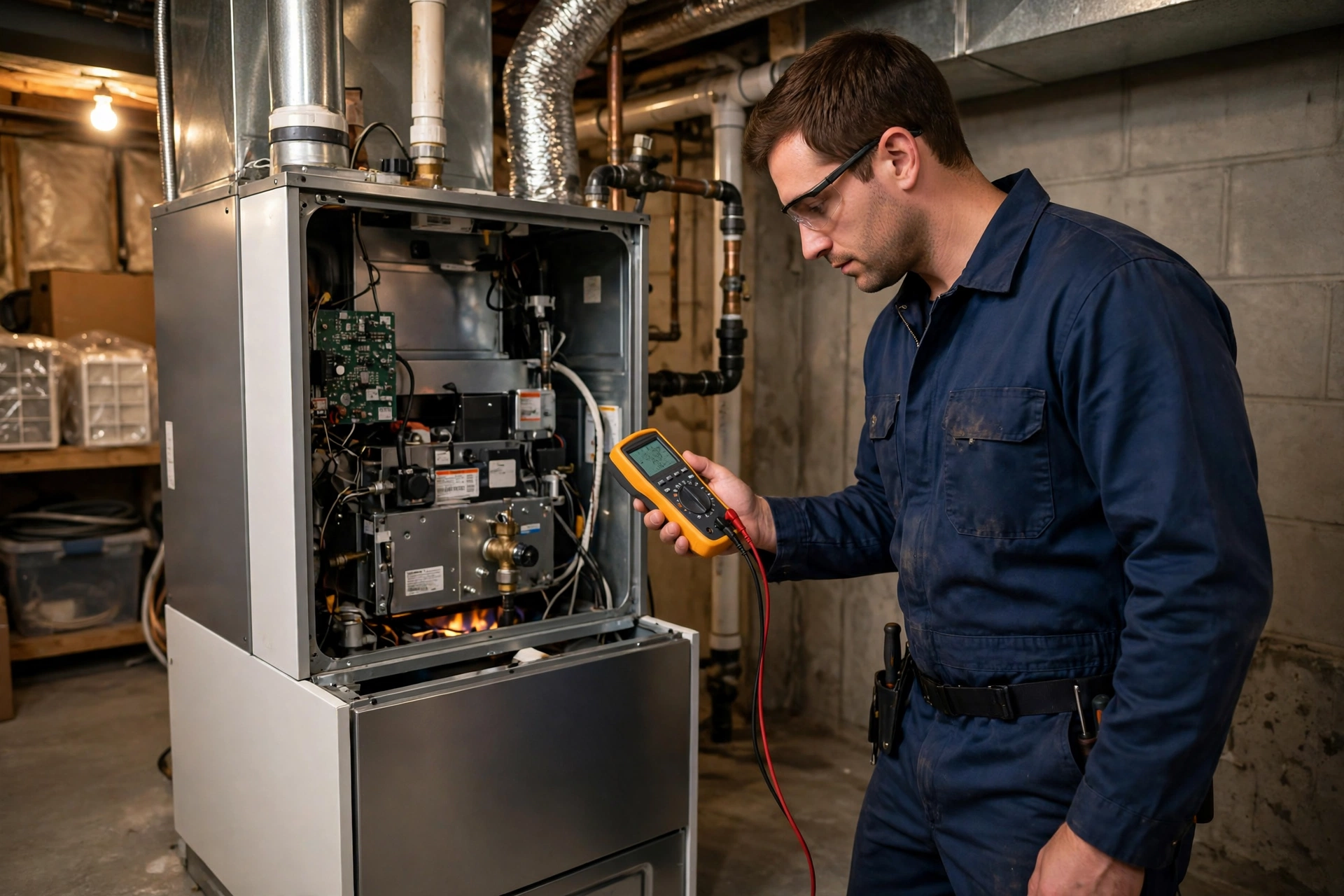
The definitive test for a hot surface igniter is a resistance reading with a multimeter. The technician disconnects the igniter, measures its resistance in ohms, and compares it with the range the manufacturer specifies for that model. A reading far outside that range — or no reading at all, an open circuit — confirms the igniter has failed.
Resistance rises as an igniter wears. A reading well above the specified range means the igniter is weak and may glow without getting hot enough to light gas. An infinite reading means it has cracked through completely. Either way, the test gives a clear answer rather than a guess, and it also tells the technician whether the replacement needs to be the same type.
If the igniter tests good but does not glow, the technician checks whether the control board is sending it the correct voltage during the ignition trial. No voltage means the fault is upstream — the control board, a loose connection, or a safety switch holding the sequence back. Voltage present but no glow means the igniter itself has failed.
A thorough technician tests the parts around the igniter as well: the flame sensor's signal, the gas valve's operation, and the pressure switch. Ignition faults often have more than one contributor — a dirty flame sensor and a weak igniter together, for example — and fixing only one leaves the other to fail on the next cold night.
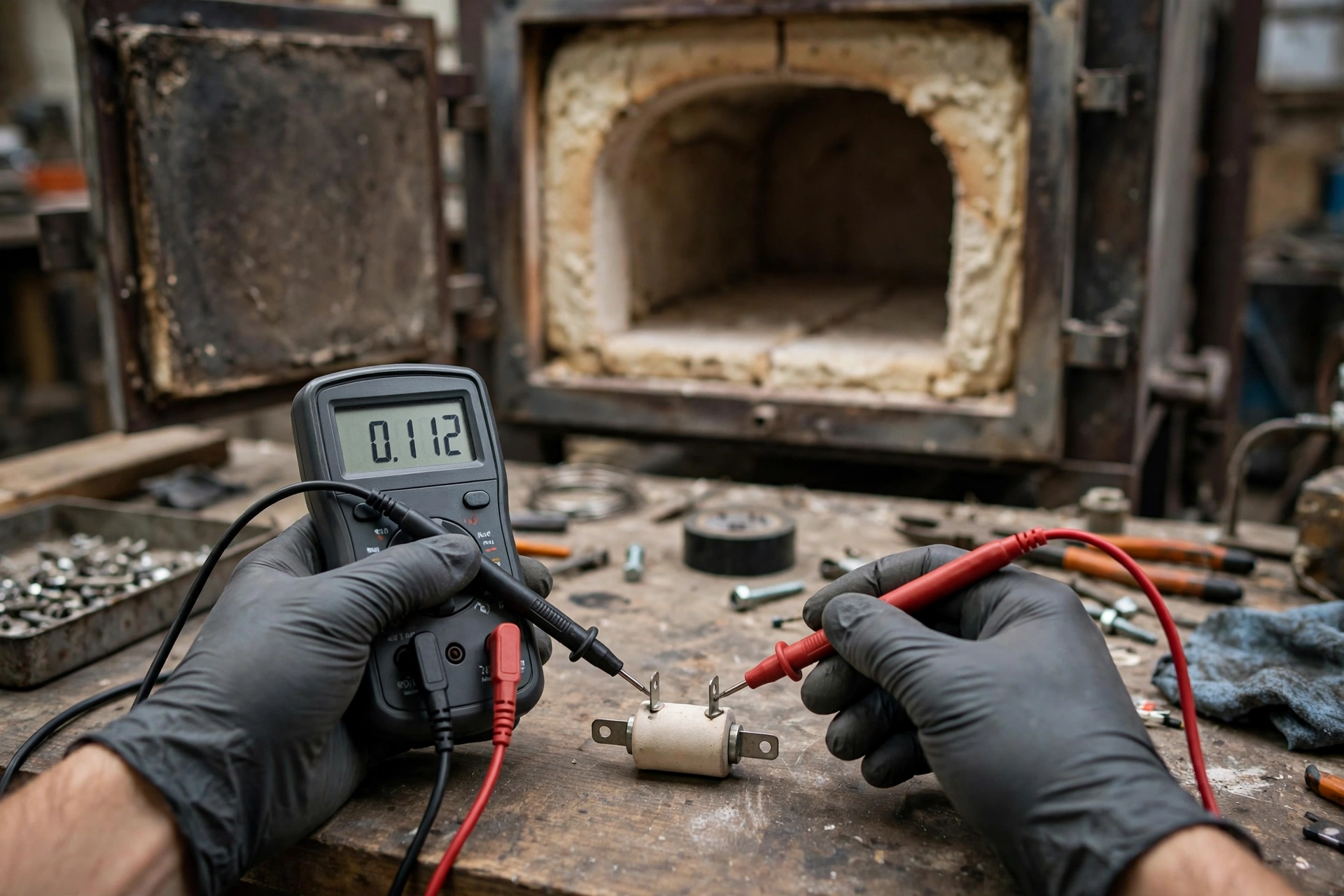
Igniter work is usually one of the quicker furnace repairs, but only when it is done properly — with the right part, tested through a full heating cycle before the technician leaves.
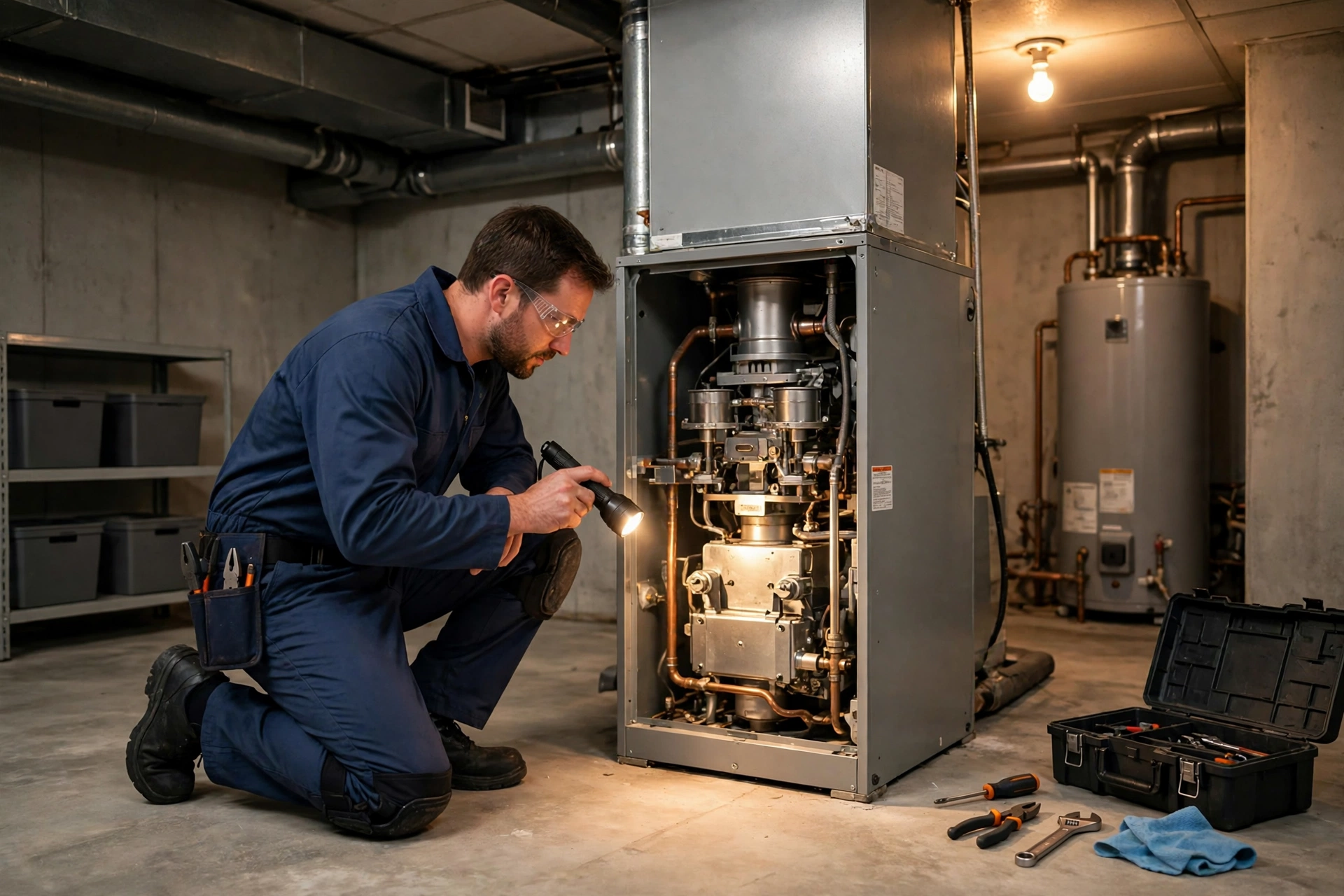
The visit follows the same order as the diagnosis above: error code, testing, and then the repair. The technician removes the failed igniter — handling the new one by the base only, with gloves — fits the replacement, reconnects it, and runs the furnace through several full heating cycles to confirm the burners light cleanly every time and the flame sensor holds.
An igniter that has cracked or reads outside its resistance range is replaced, not repaired. There is no reliable way to repair a ceramic igniter. But if testing shows the igniter is good and the fault is elsewhere — a dirty flame sensor, a pressure switch, a gas valve — then the igniter stays, and the real fault gets fixed. A technician who replaces parts without testing is guessing at your expense.
Igniters are not universal, even when they look alike. The voltage, the resistance range, the mounting bracket, and the connector all have to match your furnace model. Fitting the wrong igniter can light the gas unreliably, burn out quickly, or damage the control board. That is why the technician notes the furnace make and model before ordering or fitting a part.
Universal igniters exist, and they can work well when they are properly matched to the furnace's voltage and resistance range. But a universal part fitted without checking those numbers is a gamble. If a technician fits one, they should be able to explain why that part matches your furnace — and they should test the furnace through full cycles afterwards, not just once.
The repair is not finished when the furnace starts once. A careful technician runs it through a full heating cycle — call for heat, ignition, burner operation, blower start, and shutdown — and then repeats it, checking that the burners light cleanly every time, that the flame sensor holds, and that there is no gas smell or delayed ignition. Only then is the visit complete.
Igniter faults share symptoms with several other furnace problems. This section helps you tell them apart, so you can describe your fault accurately and understand what the technician is testing.
If the burners light with a steady blue flame and then go out within a few seconds, the flame sensor is the usual suspect. The igniter did its job. The sensor is a small rod that sits in the flame and proves to the control board that the burners are lit. When it is dirty or coated, it cannot prove the flame, and the board shuts the gas off. Cleaning or replacing the sensor fixes it.
If the inducer fan runs but the sequence never reaches the igniter — no glow, no clicking — the pressure switch may be holding it back. That usually means a blocked vent, a frozen condensate drain, or a failed switch. In Everett winters, snow and ice blocking the outside vent is a common cause, and clearing it can restore normal operation.
If you can see the igniter glowing brightly but no flame appears, the gas valve may not be opening. The valve is electrically operated, and it can fail, or the control board may not be sending it power. This is a gas component fault, and it should only be tested and replaced by a qualified technician.
If the igniter tests good, the pressure switch is closed, and still nothing happens, the control board may not be sending power to the igniter. Control board faults are less common than igniter faults, but they do happen — often after a power surge. A technician checks voltage at the board before concluding it has failed, because a board is a more involved repair than an igniter.
A thermostat that is not calling for heat, a loose wire, or a blown fuse on the control board can all look like an igniter fault from the outside — the furnace simply does nothing. That is why the safe checks at the start of this guide matter: thermostat, switch, breaker, and filter first, before anyone assumes the igniter is at fault.
Homeowners often ask how long an igniter should last. The honest answer is that it depends on the type, the furnace, and how the home treats it — but there are useful ranges.
A hot surface igniter typically lasts several years of normal use, and in many furnaces it is the first major part to need replacement. That is normal. It is a wear part, and its lifespan is measured in heating cycles rather than calendar years — a furnace that cycles often, in a home with poor insulation or an oversized system that short-cycles, will wear its igniter out faster.
Cold snaps, frequent cycling, power surges, and damp basements all shorten igniter life. So does short cycling — when the furnace starts and stops far more often than it should, each extra cycle is another heating and cooling of the igniter. Fixing the cause of short cycling, often a clogged filter or an airflow problem, protects the igniter as well as the rest of the furnace.
One igniter failure is normal wear. Two in quick succession is a warning. If a replacement igniter fails within a season, something else is wrong — usually voltage from the control board, a gas valve problem causing delayed ignition, or moisture reaching the burner compartment. A technician who simply fits another igniter without investigating is treating the symptom, not the cause.
Everett's housing stock shapes how ignition faults show up. Many homes here were built in the early twentieth century, and many heating systems have been patched, converted, and repaired over decades.
Older furnaces may still have a standing pilot, or an early electronic ignition system with parts that are harder to match. A part that fits a newer high-efficiency furnace may not fit an older unit, and a technician may need to check the model and serial number carefully before ordering. That is not a problem — it is a reason to note the model number before you call.
Some Everett furnaces were converted from oil to gas, or had their ignition system replaced at some point in their life. Converted systems can have a mix of old and new parts, and the igniter type may not match what the model number suggests. A diagnostic-first approach matters here more than anywhere: test before replacing, and confirm the part matches the system as it is, not as it was built.
In a triple-decker, the top floor is the most exposed to wind and cold, with a roof above it and long duct runs below it. If the furnace is short-cycling or struggling to light reliably, the top floor feels it first — the heat never quite reaches the rooms furthest from the furnace. An igniter fault that causes repeated failed starts will show up as uneven heating before it shows up as no heat at all.
If you rent, tell your landlord or property manager as soon as the heat fails, and keep a record of when you called. If you are a landlord, a no-heat call in winter is urgent for your tenants' safety and for the building's pipes. Everett Air HVAC works with homeowners, landlords, and property managers across Everett and nearby towns.

You cannot prevent every igniter failure — it is a wear part, and it will eventually fail. But you can remove the conditions that kill igniters early, and you can catch a weak one before it fails on the coldest night of the year.
Check the filter monthly in winter, and change it when it looks dirty. A clean filter protects airflow, the heat exchanger, and the blower motor — and it stops the overheating and short cycling that stress the igniter. It is the single most useful thing a homeowner can do for their furnace.
A furnace tune-up in early autumn is the best time to catch a worn igniter, a dirty flame sensor, a weak capacitor, or a cracked part before the first cold snap. During a tune-up, a technician can measure the igniter's resistance and tell you whether it is healthy or near the end of its life. That is a routine visit, not an emergency, and it gives you time to plan if something needs attention. Our furnace maintenance basics guide explains what a tune-up covers and which checks you can do yourself.
Keep the area around the furnace free of boxes and clutter, keep the condensate drain clear, and deal with basement damp where you can. A dry burner compartment protects the igniter, the wiring, and the control board. Do not store paint, solvents, or cleaning chemicals near the furnace — their fumes can damage burner components and, in some cases, create a safety risk.
Take a photo of the furnace model and serial number, note the filter size, and keep the manual in a known place. When you call for help, that information helps a technician arrive with the right part — including the right igniter type — instead of making two trips. If you have had an igniter replaced before, note the date; it helps the next technician judge whether the failure is normal wear or a deeper problem.
An igniter repair is a small job, but it is still gas and electrical work inside your home. Choosing the right company matters as much for a small job as for a large one.
Choose a company that actually serves Everett, holds the right Massachusetts credentials, and carries liability insurance and workers' compensation. Ask for the business address — Everett Air HVAC is at 15 Ellsworth St, Everett, MA 02149 — and be cautious of any company with no physical address or unmarked vehicles.
A trustworthy technician tests before replacing. If a company offers to replace the igniter without testing it, or without checking the flame sensor, gas valve, and voltage, you are paying for a guess. Ask what the diagnosis found before any work starts, and expect a clear explanation in plain language.
A trustworthy company explains what it found, what the repair involves, and what happens if a part needs ordering, before any work starts. It does not push a full replacement before diagnosing the problem, and it does not refuse to give you a written explanation of the work. If the furnace is old and the repair raises a larger question, our guide to furnace repair vs. replacement explains how to weigh that decision without pressure.
High-pressure sales, insisting on cash only, or refusing to provide a written record of the work are red flags. For a true emergency, getting the heat back safely comes first. For any larger recommended work after that, you can always get a second opinion. Reviews matter too — read recent ones, not just the star rating, and look for how the company responds when something goes wrong.
If you feel pressured, pause and get a second opinion on non-urgent work. A company that will not put its findings in writing is a company to be careful with. The repair itself should leave you with a clear record of what was tested, what was replaced, and what to watch for next.
Everett Air HVAC serves Everett and the towns around it — Malden, Medford, Chelsea, Revere, Somerville, Lynn, Melrose, Saugus, Winthrop, and nearby communities. If your furnace tries to start and fails, call (617) 665-6978 for furnace igniter repair and heating system repair. If you are in a nearby town, call and tell us where you are — we will tell you honestly if we can reach you and when.
A local technician knows Everett's housing stock — the triple-deckers, the older basements, the long duct runs, the converted systems — and does not need to learn it on your coldest night. That local experience is part of what makes a diagnosis faster and more accurate, and it is the difference between a part replaced by guesswork and a fault found by testing. For the full picture of what to do when the heat goes out entirely, see our emergency furnace repair guide.
Your address, the type of system you have if you know it, what the furnace does in order when it tries to start, whether you saw a glow or heard clicking, the error code if it locked out, and whether anyone in the house is at risk from the cold. You do not need to know the technical terms. Describe what you see and hear, and we will take it from there. If your furnace will not turn on at all, is blowing cold air, or is making strange noises, those guides cover the safe checks for each symptom.
Describe what your furnace is doing, and we will talk through the next step — a short conversation beats a long search when the heat is out.
What counts as a furnace emergency, what to check safely in the first minutes, and what happens on an emergency visit. Call (617) 665-6978.
Read the guide →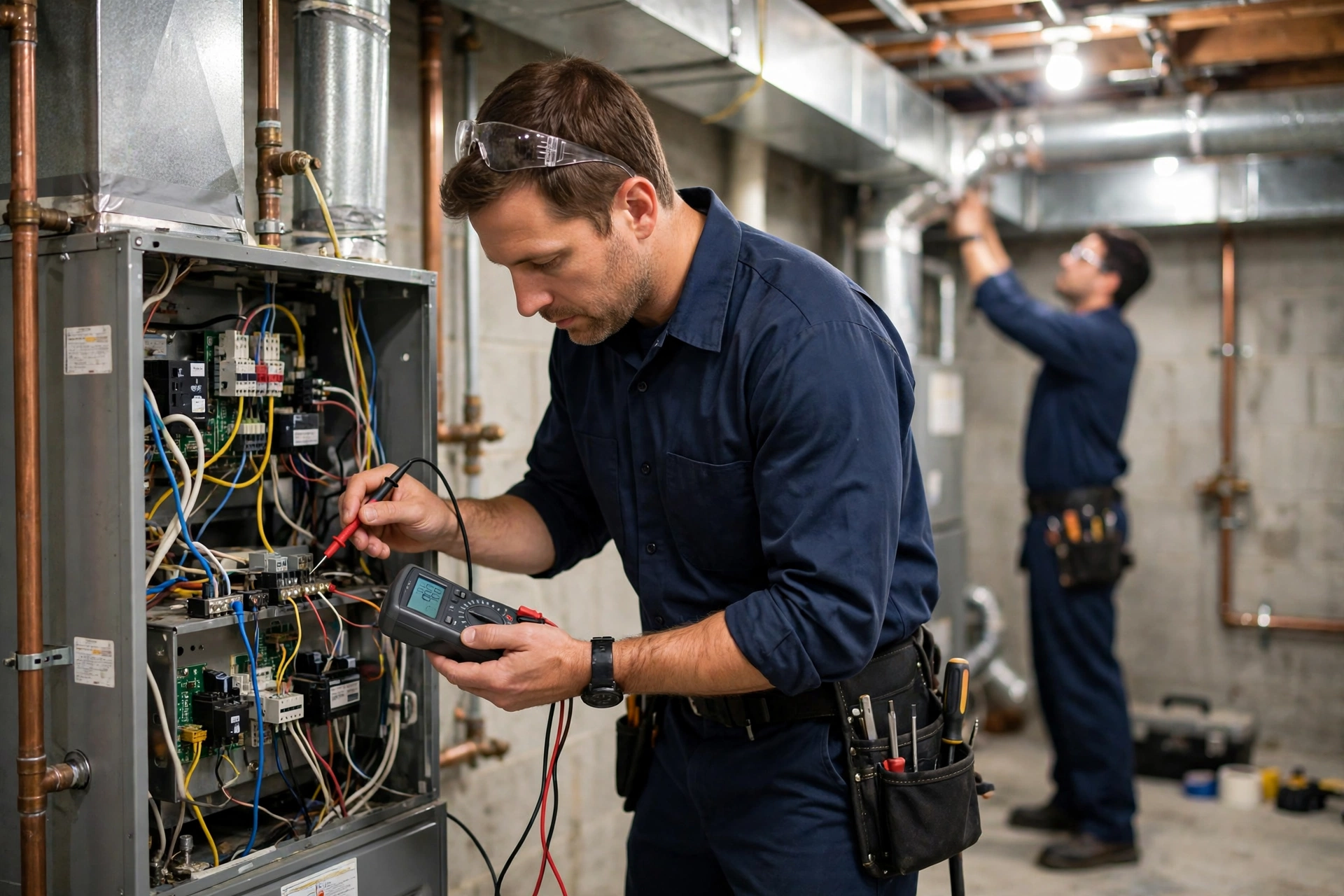
A furnace that does not start may have a thermostat, power, ignition, condensate, or safety-control issue. Check the safe basics, note any indicator code, and avoid repeated resets.
Read the guide →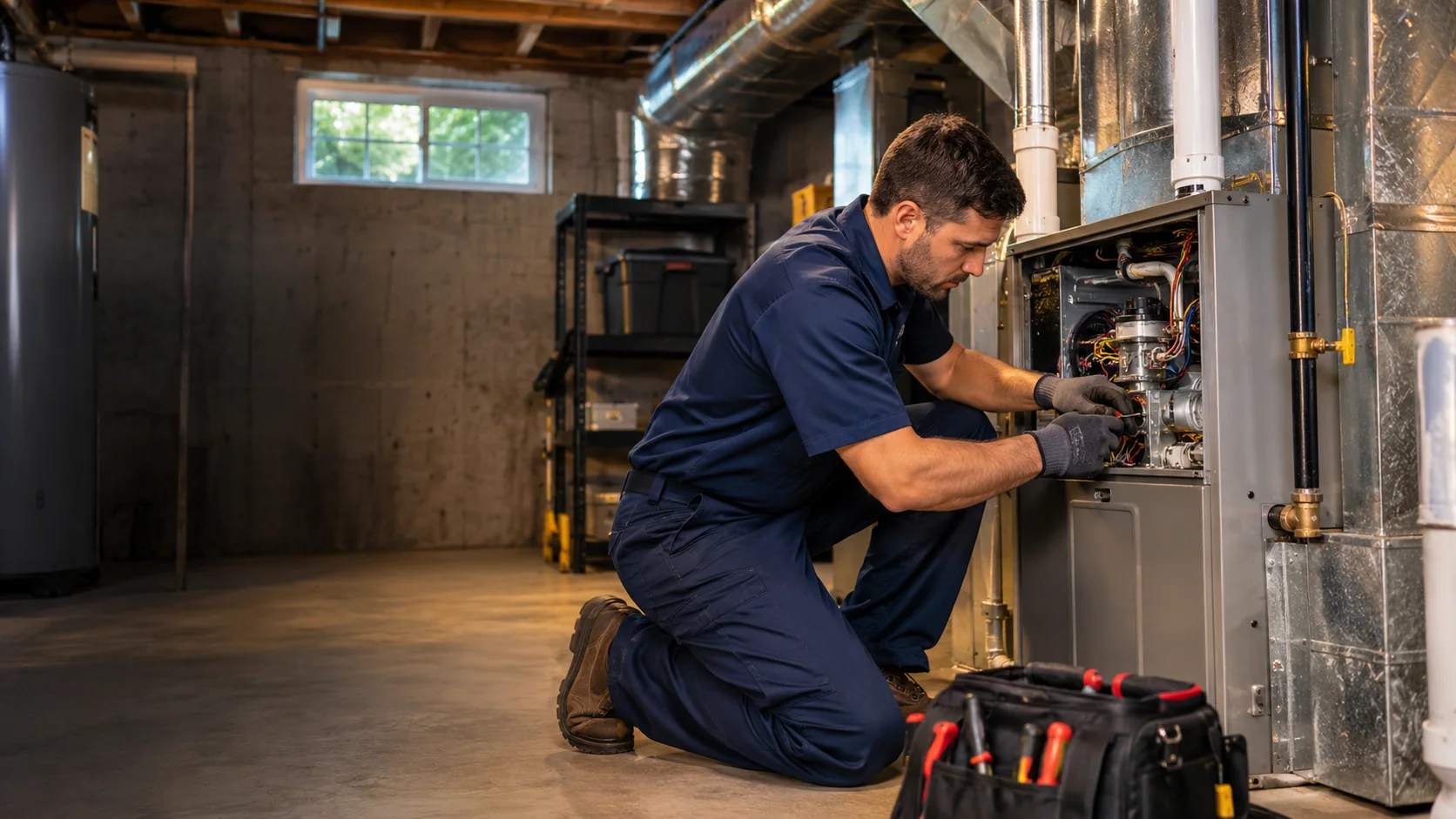
A furnace that runs but sends cool air may have a thermostat, airflow, ignition, or control issue. Start with safe observations, then arrange diagnosis if the cause is not clear.
Read the guide →Heating and cooling services for Everett homes. Each service has a clear description, a related photo, and a direct link to the full page.
No heat, cold air, short cycling, ignition faults, blower failure, and strange furnace noises in Everett homes — diagnosed and repaired by Everett Air HVAC.
Read More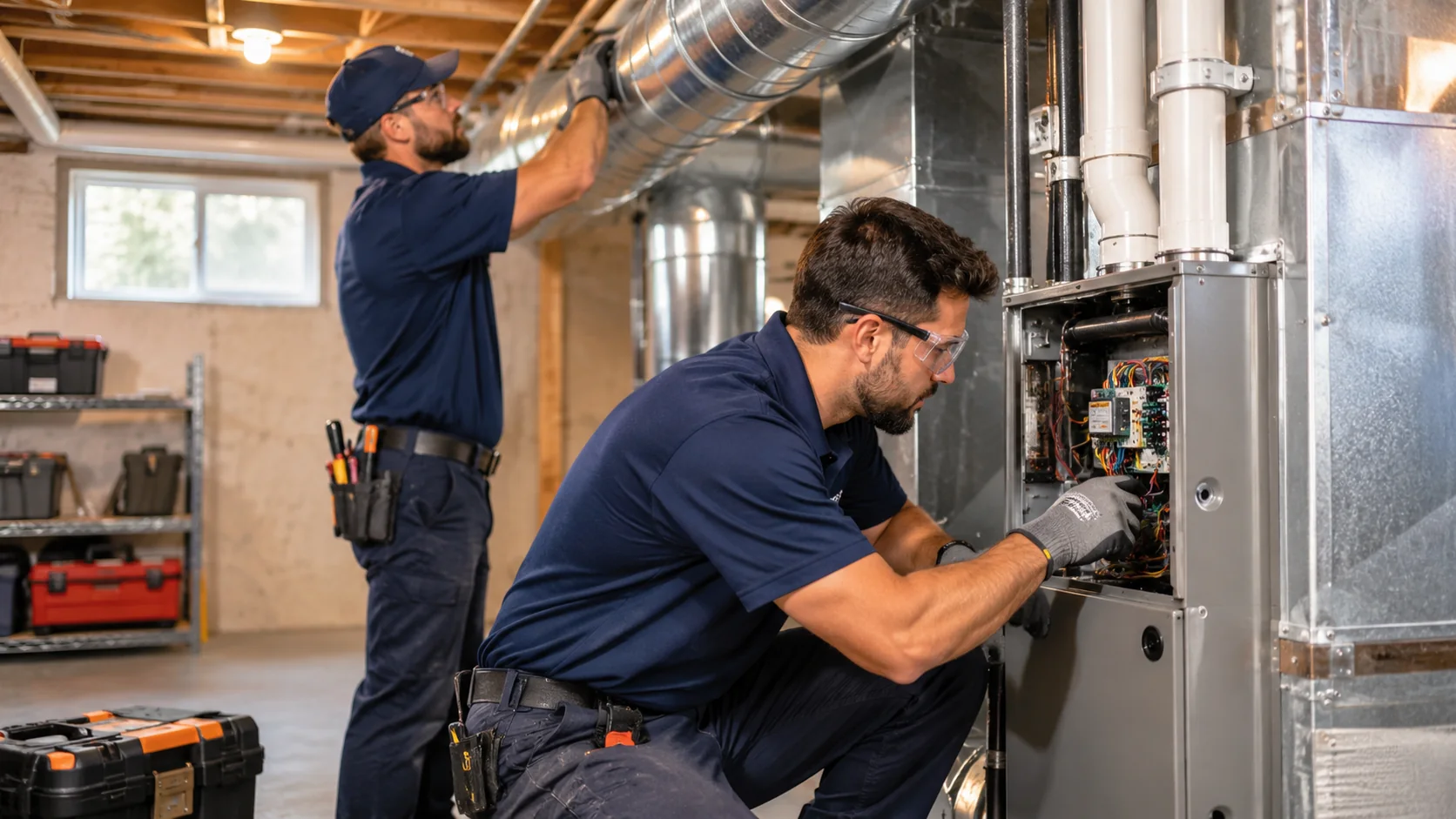
Seasonal furnace maintenance in Everett, MA: safety checks, cleaning, airflow, ignition, and controls to keep your furnace reliable through a New England winter.
Read More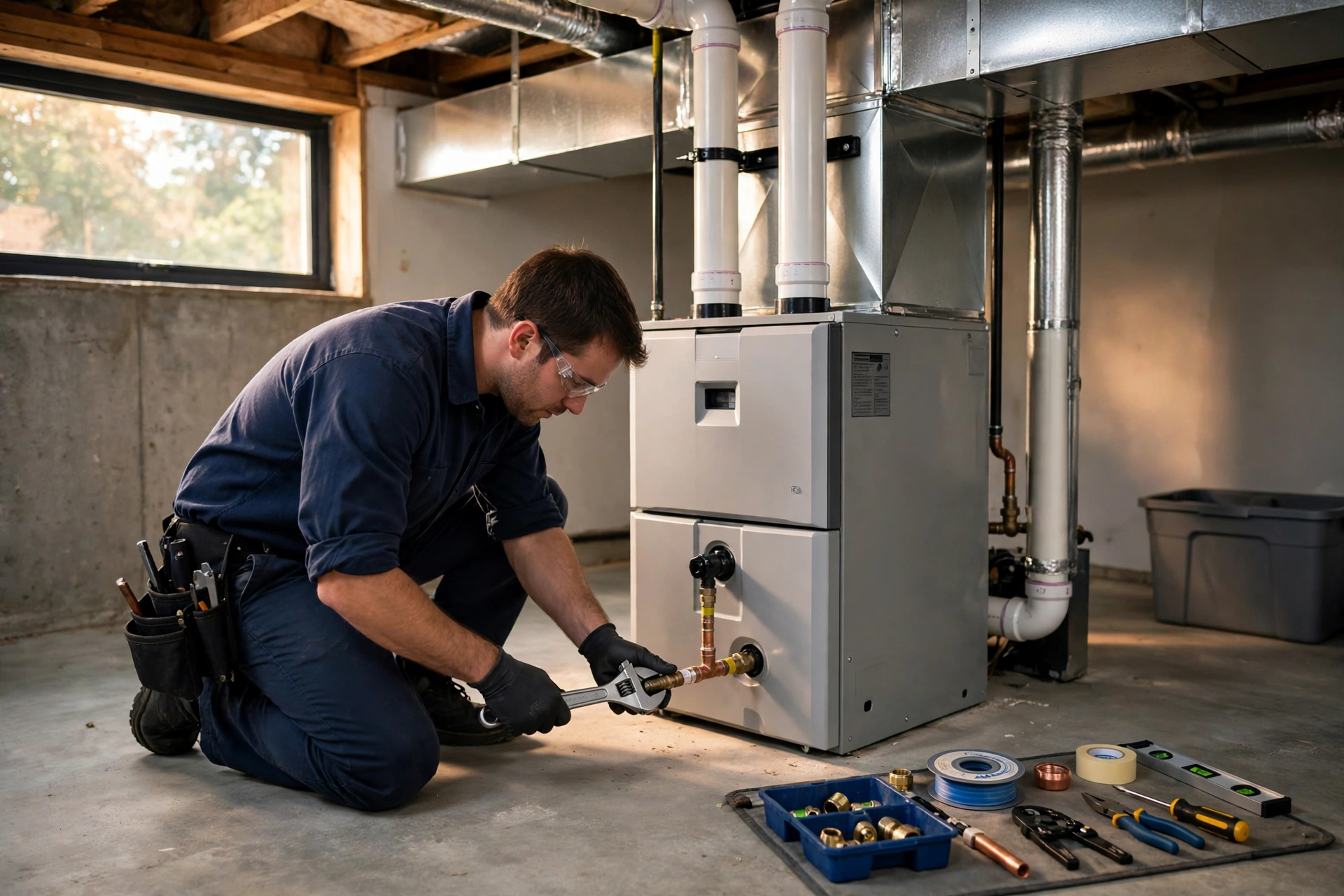
Furnace replacement in Everett, MA: right-sized, high-efficiency systems, honest repair-vs-replace advice, and clean installation with testing.
Read More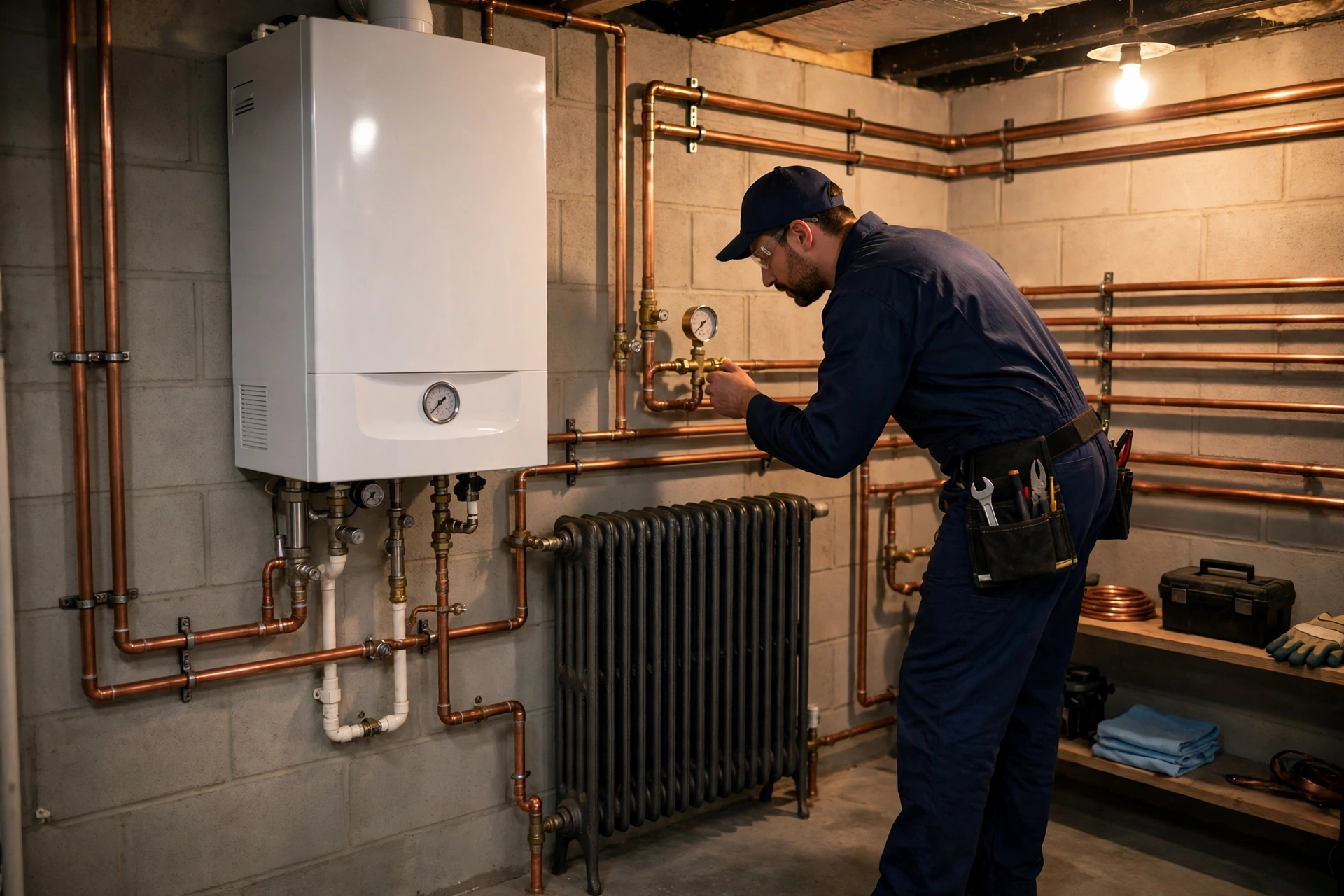
Boiler repair and maintenance in Everett, MA for radiators and baseboard heating in older homes, triple-deckers, and multi-family properties.
Read More
Whole-system heating repair in Everett, MA: uneven rooms, cold spots, thermostat and control faults, and systems that will not keep up in cold weather.
Read More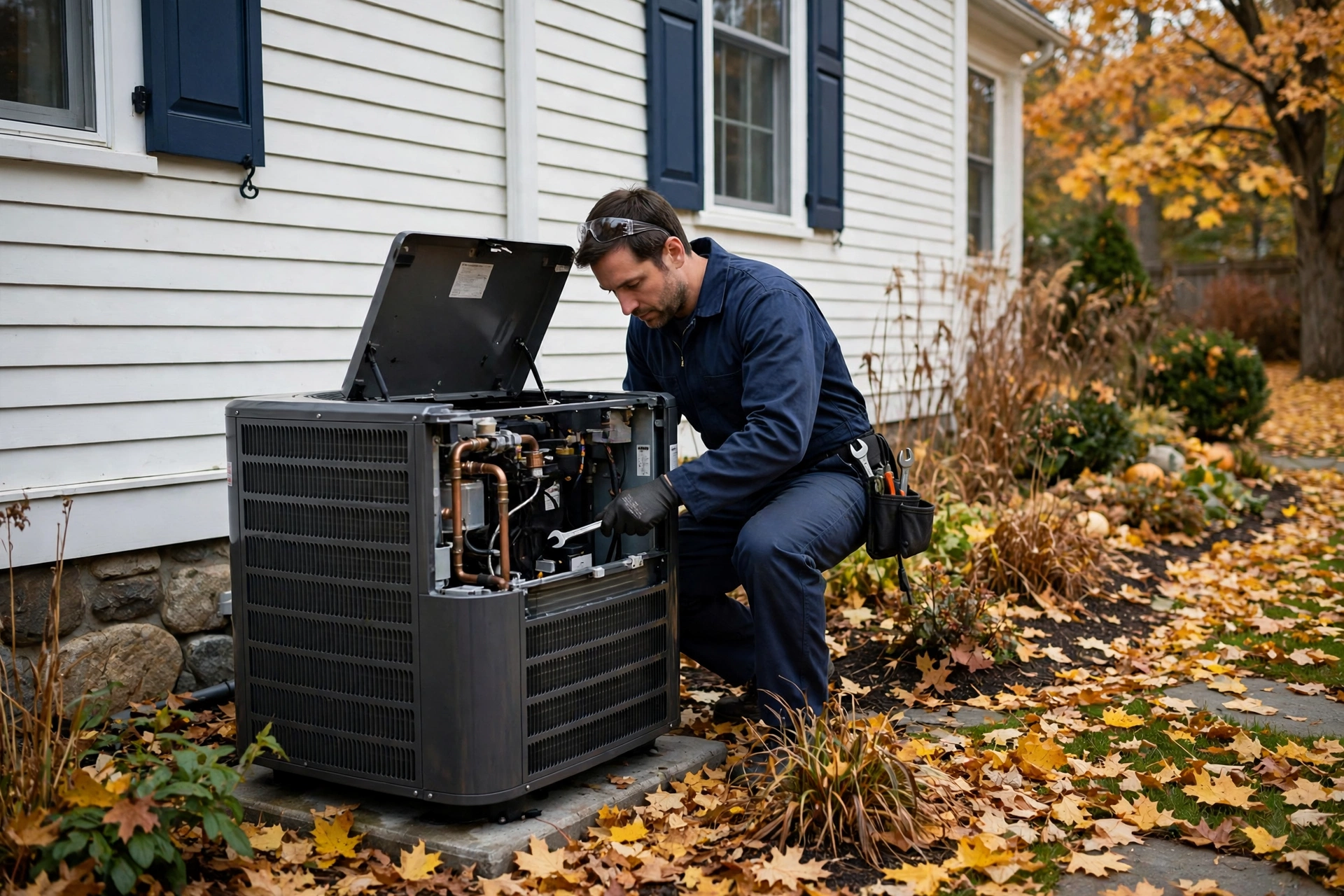
Heat pump repair, maintenance, and installation in Everett, MA for efficient year-round heating and cooling in homes with and without ductwork.
Read More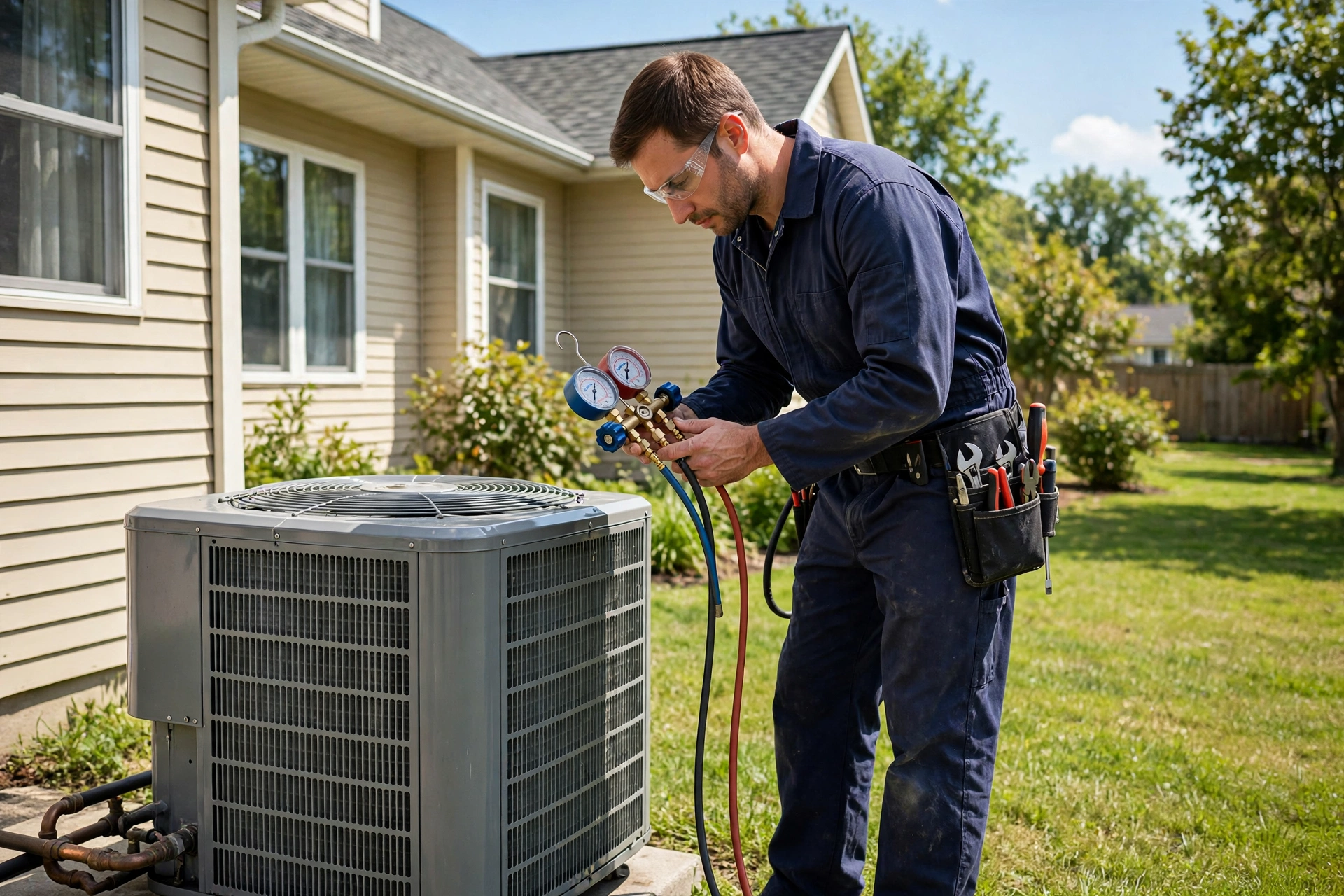
Air conditioning repair, maintenance, and installation in Everett, MA: airflow, refrigerant, controls, and drain faults handled before the next heatwave.
Read More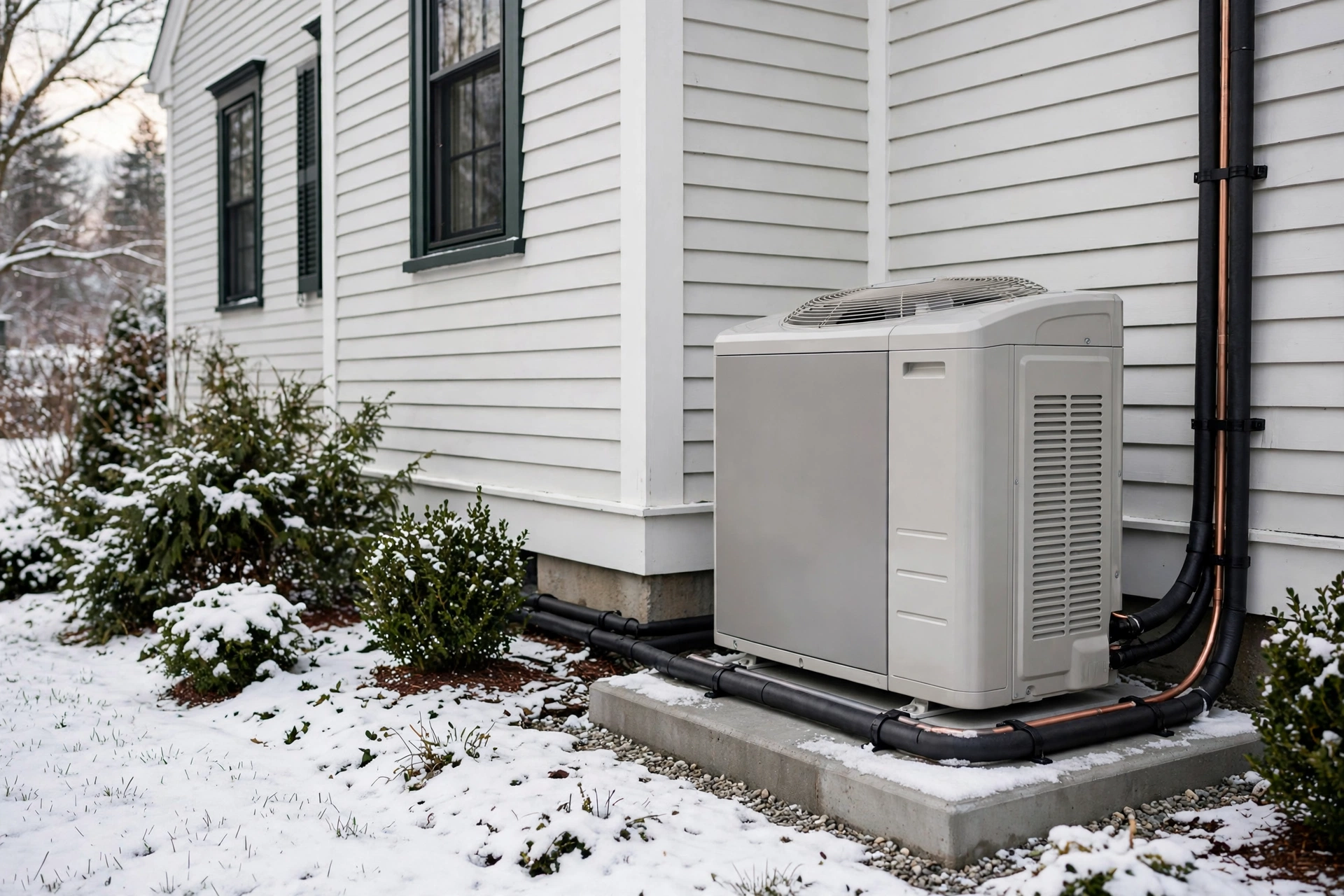
Ductless mini-split repair, maintenance, and installation in Everett, MA for rooms, additions, and triple-deckers without ductwork.
Read More
Ductwork inspection, sealing, repair, and airflow balancing in Everett, MA so heated and cooled air reaches every room.
Read MoreShort answers to the questions Everett homeowners ask most.
The clearest signs are a furnace that tries to start and then stops, no orange glow visible through the sight glass during startup, and a lockout with a blinking error code after three failed attempts. The burners never light, and the blower may push cold air. A technician confirms it by measuring the igniter's resistance with a multimeter.
No — not safely. Hot surface igniters are extremely fragile, carry high voltage while the furnace is starting, and sit inside a gas appliance. Skin oils alone can damage the ceramic and crack it. Simple homeowner tasks are changing the filter, changing thermostat batteries, and checking the breaker once. Anything involving gas, electrical components, or the burner compartment should be left to a licensed professional.
A repeated clicking sound with no flame usually means a spark igniter is trying to light the gas and failing. The gas valve may not be opening, the igniter may be worn, or the spark may not be reaching the gas. Do not keep resetting the furnace to make it click again — repeated attempts with gas present can cause delayed ignition. Turn it off at the switch and call for help.
A hot surface igniter typically lasts several years of normal use, and it is usually the first major part to need replacement. Its life is measured in heating cycles rather than calendar years, so a furnace that short-cycles wears its igniter out faster. Power surges, damp basements, and a dirty filter all shorten its life. If a replacement fails within a season, something else — usually voltage or a gas valve problem — is causing it.
That is usually the flame sensor, not the igniter. The igniter lights the burners, but the flame sensor cannot prove the flame to the control board — often because it is dirty or coated — so the board shuts the gas valve off within seconds. A technician tests both parts, because replacing the igniter will not fix a flame sensor fault.
Turn the furnace off at the switch and call for help. A loud bang on startup is delayed ignition — gas built up in the burner compartment before it lit. Do not keep starting the furnace to see if the noise goes away. If you smell gas, leave the house and call your gas company and 911 from outside.
Tell us what your furnace is doing, and we will talk through the next step.